
 Anil Krishna

 Jonathan Millar


 James Oconner

The Love Hypothesis – Review: A Solid Prime Video Adaptation That Lacks Bite
©Prime Video
From becoming a huge BookTok favorite to finally making its way onto Prime Video, Ali Hazelwood’s The Love Hypothesis has had quite a journey. Now it’s a movie, with Lili Reinhart taking on the role of Olive Smith, and naturally, the big question hanging over it is whether the adaptation can live up to all that fan excitement. More importantly, does it actually capture what made the book work in the first place?
Romance still gets treated a little unfairly, especially when compared with other genres. There’s this old idea that romantic stories are mostly lightweight entertainment aimed at women, as if that automatically makes them less interesting. But romance has also become a useful way for writers to get into subjects that might otherwise be pushed aside. Ali Hazelwood does this particularly well. Her books obviously have romance, attraction and all the expected spicy moments, but there is usually something else going on underneath.
A big part of Hazelwood’s appeal comes from the way she writes women trying to find their place in STEM. Her characters aren’t simply dealing with relationship problems. They’re also dealing with workplaces, academic politics, sexism, ambition and the constant pressure to prove that they belong. That’s a big reason The Love Hypothesis, her debut novel, connected with so many readers. So when Prime Video announced the movie, expectations were always going to be high. BookTok had already done plenty of the marketing for it, and by the time the trailers, casting news and behind-the-scenes photos started appearing, fans had spent months imagining what this version would look like. The question was whether director Claire Scanlon and screenwriter Sarah Rothschild could bring that same feeling to the screen.
A Fake Relationship That Gets Complicated

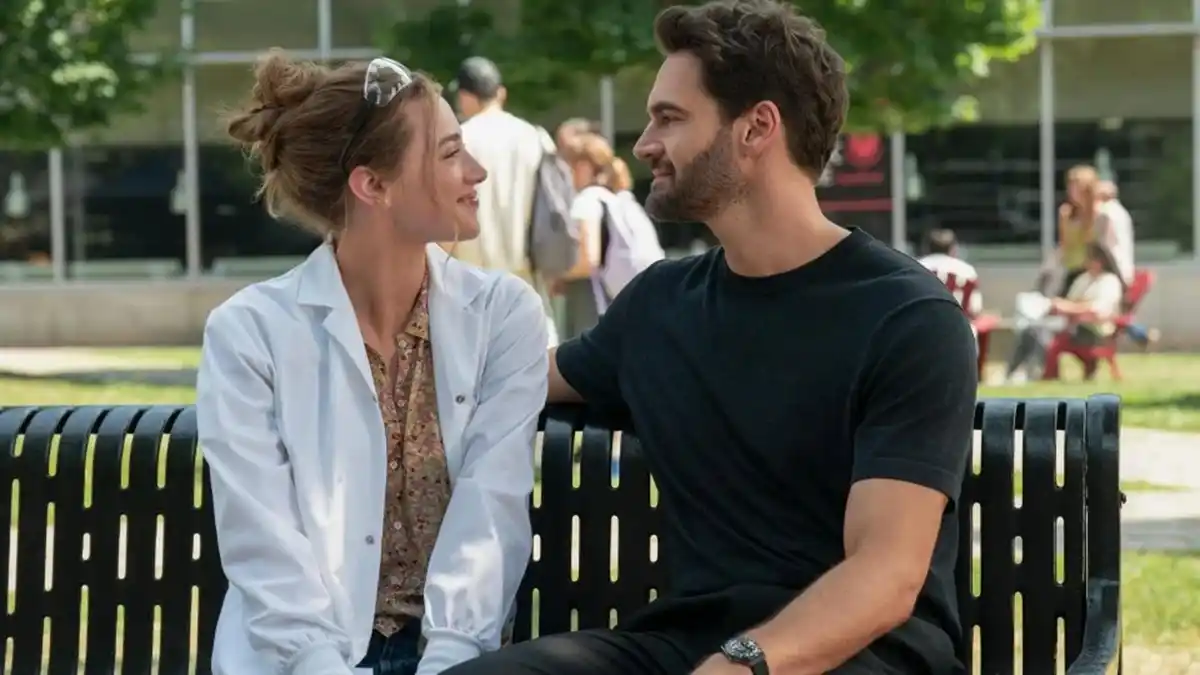
The basic setup is pretty simple, and honestly, that’s part of the fun. Olive Smith is a Stanford PhD student who is trying to keep her academic life together while also dealing with the usual messiness of relationships and friendships. She lives with Malcolm and Anh, although Anh is really more like family than just a roommate. Things get complicated when Olive notices Anh flirting with Jeremy, a guy Olive used to have feelings for herself.
In a moment of pure panic and questionable decision-making, Olive decides to prove to Anh that she has completely moved on. That plan involves a sudden kiss with the first person who happens to be there. Unfortunately for Olive, that person is Professor Adam Carlsen, one of the most intimidating academics on campus. Students basically know him as “Dr. Male,” which tells you pretty much everything you need to know about his reputation.
The situation could have ended there, except it doesn’t. Olive suddenly finds herself having to deal with the possibility of being reprimanded for what happened, while Adam has his own reason for keeping the fake relationship going. He needs to look more settled and stable while trying to secure an important research grant. So, somehow, the two agree to pretend they’re together.
Obviously, neither of them expects the fake relationship to become anything more than that. And obviously, it does. Between awkward dates, academic pressure and all the usual complications that come with pretending to be in love, Olive and Adam gradually start developing real feelings for each other. The fake romance starts looking a lot less fake.
Lili Reinhart Works, But the STEM Story Gets Pushed Aside
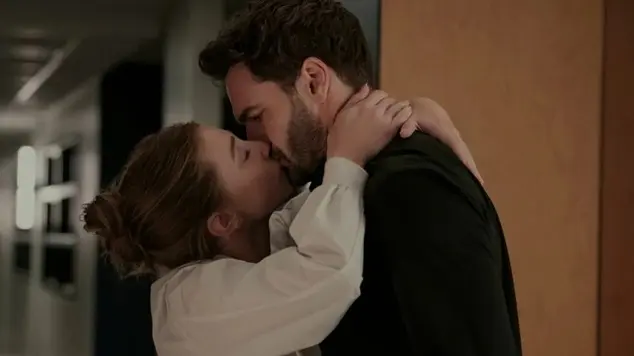
The movie sticks fairly closely to the major beats of the novel. Olive meets Adam, the fake-dating arrangement happens, and the story follows the same basic path as the book. The problem is that everything moves very quickly. The screenplay is almost too determined to get from one plot point to the next, and that leaves surprisingly little room for the characters to just exist.
That becomes noticeable because The Love Hypothesis really needs those quieter moments. A two-hour movie obviously can’t include everything from the novel, but there are places where another scene or a little more dialogue could have helped. Olive and Adam’s relationship sometimes feels like it’s developing because the story says it should, rather than because we’ve had enough time to watch it happen.
Lili Reinhart is easily one of the strongest parts of the film, though. She gives Olive a believable mix of awkwardness, intelligence and vulnerability, and she manages to make the character feel like an actual person instead of just the standard rom-com lead. There’s a nice energy to her performance, especially in the lighter scenes.
Tom Bateman’s Adam is a little harder to connect with. He isn’t exactly bad, but the character spends so much time looking stern and annoyed that some of the personality gets lost along the way. Adam is supposed to be intimidating, but there are moments when the performance pushes that quality a bit too far, making him feel more like a grumpy academic stereotype than a complicated character.
The movie does get the overall tone mostly right. It knows when to be funny, when to let the romance take over and when to bring in a little drama. The problem is that the more interesting part of the story—the stuff about women trying to survive and succeed in STEM—doesn’t get nearly as much attention as it deserves.
The film brings that issue back into focus toward the final act, but by then it feels almost like something that needs to be wrapped up before the credits. The resolution comes quickly, and the sharper edge of Hazelwood’s novel gets softened considerably. What’s left is a much more familiar romantic-comedy story. There’s nothing particularly wrong with that, but it does make the adaptation feel less distinctive than the book.
Claire Scanlon Keeps Things Simple

Claire Scanlon’s direction follows much the same philosophy. There aren’t many big stylistic swings here, and the movie isn’t trying to reinvent the romantic-comedy formula. Instead, everything is clean, bright and fairly straightforward. That actually works for the most part. The camera never gets in the way of the story, and the awkward conversations, comedic moments and romantic scenes all move along easily enough. It’s a comfortable-looking movie, and there’s a certain appeal to that. Scanlon knows what kind of film this is supposed to be and doesn’t try to make it something completely different.
At the same time, that safe approach is also where some of the movie’s limitations come from. The Love Hypothesis had the opportunity to be more than just another pleasant fake-dating romance. The book had enough material to say something about ambition, sexism and the difficulties women face in academic spaces. The movie touches on those ideas, but mostly stays on the surface.
Final Verdict
The Love Hypothesis is a perfectly enjoyable romantic comedy, and there’s enough here to explain why fans of the genre will have a good time with it. Lili Reinhart gives the movie a strong center, the chemistry and comedy generally work, and Claire Scanlon keeps everything moving without making the film feel overly complicated.
The bigger issue is that the adaptation plays things a little too safely. In turning Hazelwood’s novel into a fast, accessible rom-com, it loses some of the material that made the story feel different in the first place. The commentary about women in STEM is still there, but it no longer has quite the same weight.
So, yes, The Love Hypothesis works as a light romance. It’s easy to watch, nicely put together and rarely unpleasant. But for anyone coming to it because they loved the book’s mix of romance and sharper themes, there’s a good chance it will feel like something has been left behind along the way.
About the Author



1 thought on “The Love Hypothesis – Review: A Solid Prime Video Adaptation That Lacks Bite”