 James Oconner

 Anil Krishna
 Jonathan Millar


Carrie’s ending upended everything you thought you knew about Stephen King’s novel
© Prime Video
Carrie is available on Prime Video and, having reached the end of its eight episodes, it is now clear how much Mike Flanagan wanted to go beyond simply updating Stephen King’s first published novel. Smartphones, social networks, and cyberbullying had already transported Carrie White’s tragedy to the present, but it is above all the ending that profoundly changes the coordinates of the story. New characters, other people with psychic abilities, and even an explicit reference to the Glitter transform what was traditionally a closed tragedy into something much larger.
The result at times takes on the dimensions of a supernatural choral tale close to the structure of series like Stranger Things, with young people gifted with extraordinary abilities, mysterious organizations, and a mythology poised to extend beyond Chamberlain. An inevitably irreverent choice compared to the compactness of the original work, but also constructed by recovering some elements that Stephen King had left on the margins of the 1974 novel.
Warning: Contains spoilers for Carrie’s ending
What happens in the Carrie series finale
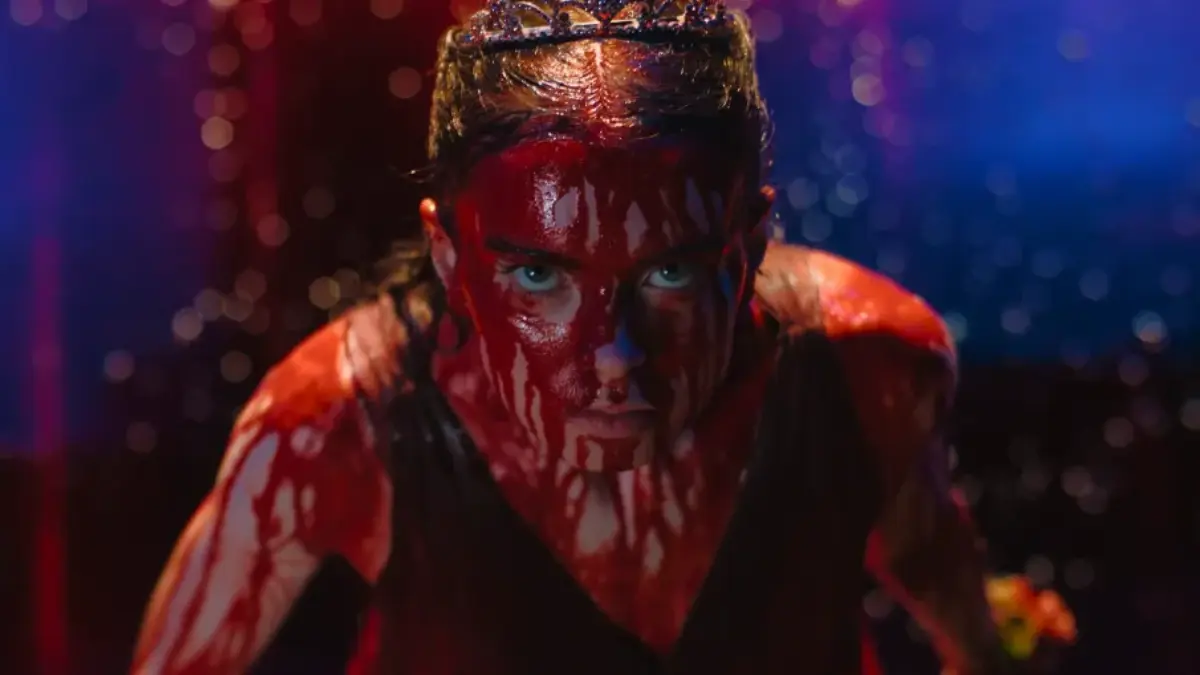
The infamous school dance initially follows the known path. Carrie is crowned queen along with Tommy Ross, Chris Hargensen and Billy Nolan drop pig’s blood on her and humiliation explodes in front of the entire school. In Flanagan’s version, however, many students react immediately by taking out their smartphones to film it: the public pillory that in the novel lived in the gym space can now instantly go digital.
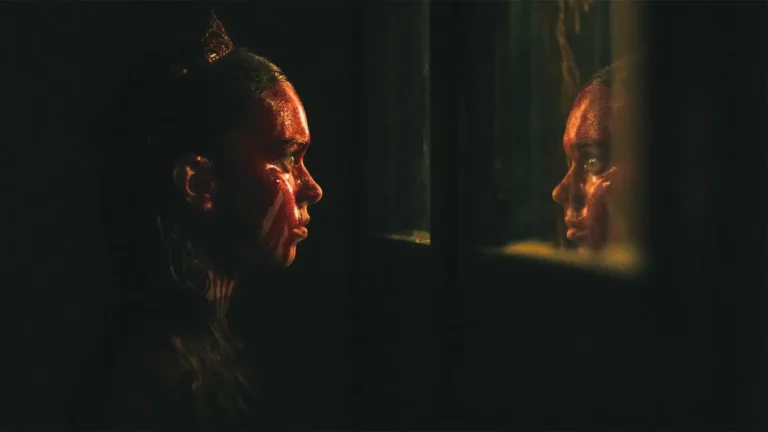
The situation escalates when Carrie releases her powers. Tommy dies accidentally and the massacre hits the gym and later Chamberlain, coming much closer in this respect to the catastrophic scale described by King than Brian De Palma’s film did. There is someone else with her, though. Emaline, the girl Carrie has been seeing all season and who seemed like she could be a projection of her mind, really exists. She possesses the ability to astrally project her own consciousness and could therefore appear alongside Carrie without being seen normally by others.
During the massacre, Emaline even temporarily takes control, contributing to what happens in the gym. This does not erase Carrie’s responsibilities: Flanagan clarified that Emaline is not controlling the girl when Tommy dies and especially when Carrie reaches Chris and Billy and kills them. Tragedy, however, becomes the product of multiple forces, some of which had remained hidden for the entire season.
After the dance Carrie returns to her mother. Margaret attempts to kill her and the house collapses, but another twist arrives: they both survive. In fact, Margaret manages to protect herself with a telekinetic ability that she had already manifested as a child and subsequently repressed.
The other women with powers and the Glitter
This is where the series definitively expands Carrie’s world. The mysterious women who appeared throughout the episodes belong to a group interested in people with psychic abilities. Leading it appears to be Adelaide, played by Kate Siegel, who also conducts interviews with survivors through which the season reconstructed the tragedy. Carrie then discovers that she belongs to a much larger reality. There are women with telekinesis, compulsion, astral projection, and other abilities, while the protagonist appears to possess particularly developed abilities even compared to the others.
The connection to Stephen King’s larger universe is made explicit in the final meeting between Adelaide and Margaret. Speaking about the abilities the woman has repressed throughout her life, Adelaide says: «Many people have a little’ Glitter and don’t even know it.» It’s a very heavy word for those who know King. Glitter is the psychic ability most associated with Danny Torrance and Dick Hallorann in The Shining, and was further developed in Doctor Sleep. Flanagan thus openly introduces the idea that Carrie’s so-called TK gene may belong to the same broad spectrum of paranormal phenomena scattered throughout the writer’s novels.
The scene ends in an equally significant manner. Margaret realizes that Carrie is still alive and wants to find her, but Adelaide decides to stop her and causes her death by arresting her heart. This passage also plays with the source material: in the novel it was Carrie who killed Margaret by acting on her heart.
What changes from book and film
It is the protagonist’s fate that represents the most evident tear. In Stephen King’s novel, Carrie returns home after devastating Chamberlain and is seriously injured by Margaret. He manages to kill his mother by stopping her heart, confronts Chris and Billy, and eventually meets Sue Snell. A final telepathic contact occurs between the two, through which Carrie realizes that Sue had not participated in the dance trap. Shortly after, he died from his injuries. Brian De Palma changes several details in the 1976 film but it retains the tragic nature of the conclusion. Carrie stabs Margaret with a series of telekinetically hurled objects and subsequently causes the house to collapse, dying along with her. The famous final scare with the hand emerging from the grave belongs to Sue’s dream and definitively confirms the protagonist’s death.
Flanagan instead takes the opposite path. After the house collapses, Emaline physically reaches Carrie and takes her away from Chamberlain. This time we are not seeing an astral projection: Emaline is actually there. Carrie wakes up in the car and the two girls drive away together to a still unknown destination. The story thus leaves Carrie White alive for the first time with the real possibility of discovering what she really is and how extensive her powers are.
Can Carrie become a new Stranger Things?
The idea of expanding mythology doesn’t come completely out of nowhere. In the final pages of the novel, King already suggested that telekinesis could manifest itself in other people and that Carrie did not represent a once-in-a-lifetime case. Flanagan walks out that door ajar and throws it wide open. The presence of Adelaide, Emaline and the other women in fact transforms the ending into a possible starting point for a completely new story. There are groups interested in gifted people, it’s not yet clear what their true intentions are, and Carrie possesses extraordinary enough abilities to attract their attention. Emaline also acted against her group’s orders in order to take her away.
The comparison with Stranger Things becomes interesting. A possible second season would no longer have a novel to adapt following the main events and could tell Carrie as part of a universe populated by individuals with psychic powers, organizations seeking them, and factions with different goals. Flanagan has already talked about the possibility of developing the story over three seasons, although Prime Video has not yet made the renewal official. The most radical change therefore remains encapsulated in the last image. Stephen King ended the story by leaving Carrie to die without really having a chance to understand the supernatural world to which she belonged. The series, however, gives her that chance: after blood, destruction, and fifty years of tragic endings, Carrie White’s journey may have just begun this time.
About the Author