
 James Oconner

 Anil Krishna

 Jonathan Millar


The Diplomat Season 4 Ending Explained: Kate Wyler’s Tuscan Mutiny and What It Means for Season 5

© Netflix
Well, that escalated quickly. The Season 4 finale of Netflix’s The Diplomat takes what was already a dangerous political situation and pushes it to the point where the people running the American government can barely stand to be in the same room anymore. Kate Wyler arrives at the G7 Summit in Tuscany with a diplomatic crisis to deal with, but by the time the finale ends, the crisis has become something much bigger. Kate walks away from the administration in full view of the world’s press, and she isn’t the only one. Several of the most powerful people in the American government follow her, leaving President Grace Penn facing a rebellion from within her own team.
The Submarine Crisis and President Penn’s Dangerous Gamble

The trouble this season goes back to a secret operation involving a Russian submarine stranded in British territorial waters. President Grace Penn and Vice President Hal Wyler secretly arrange to steal a nuclear weapon from the submarine, a move with enormous consequences if it comes to light. When key NATO allies discover what has happened, Penn has a chance to pull back or at least try to calm things down. Instead, she doubles down.
At the G7 Summit in Tuscany, Penn tries to make it clear that the United States won’t be pushed around. Her warning to allied countries is blunt: anyone who interferes with American national security priorities could face serious diplomatic and economic consequences. It’s meant to show strength, but it has pretty much the opposite effect. Rather than reassuring America’s allies, Penn makes them more nervous, while the secret submarine operation raises questions about just how far her administration is willing to go. The problem isn’t only the operation itself anymore. It’s the fact that the president seems unwilling to admit that anything she’s done might be wrong.
Stuart Hayford’s Punishment Pushes Kate Over the Edge

For Kate, though, the moment that finally makes the situation impossible to ignore is much closer to home. Stuart Hayford, her trusted colleague and the Deputy Chief of Mission, uses the State Department’s official Dissent Channel to raise concerns about the administration’s foreign policy. The channel exists so that career diplomats can speak honestly about decisions they believe are dangerous or misguided, without having to fear that doing so will wreck their careers.
That protection doesn’t seem to count for much when Penn finds out what Stuart has done. She orders him recalled to Washington, effectively removing him from his post and putting his future in the foreign service at risk. It’s a vindictive response to someone doing exactly what the system is supposed to allow him to do. And for Kate, this is the point where the administration’s behaviour becomes impossible to excuse.
Kate has spent much of the series trying to work within a political system that keeps forcing her to choose between doing her job and doing what she believes is right. She can disagree with Penn, argue with her colleagues, and try to contain the damage caused by the White House. But Stuart’s treatment makes it harder to pretend that staying inside the administration is still the best way to change anything. If even a formal, professional objection can get someone punished, what is the point of continuing to play along?
Kate’s G7 Walkout Turns Into an Administration Revolt

Kate doesn’t deliver a long speech or make a dramatic scene inside the summit. Instead, she removes her official credential badge, puts it down on the table, and walks out. It’s a small gesture, but the message is obvious. She’s done. What makes the moment so significant is what happens next. Kate’s departure could have been treated as the resignation of one increasingly frustrated ambassador. It might have embarrassed Penn for a few hours before the White House tried to move on. But then Billie Appiah, the White House Chief of Staff, follows Kate outside. Secretary of State Miguel Ganon goes with her, too. Suddenly, this isn’t just a diplomat refusing to cooperate. Key figures in the administration are openly turning their backs on the president.
And then Hal joins them.
The Vice President’s decision is the biggest blow of all, partly because of his position and partly because of his own involvement in the submarine operation. Hal was part of the secret plan, so his decision to stand with Kate raises a rather obvious question: what exactly is he planning to say about what happened? His marriage to Kate has been complicated enough without their professional lives colliding in front of the entire world. Now, the two of them are on the same side of a public revolt against the president, and there’s no quietly walking this one back.
Why Does The Diplomat Season 4 End Before Hal Speaks?
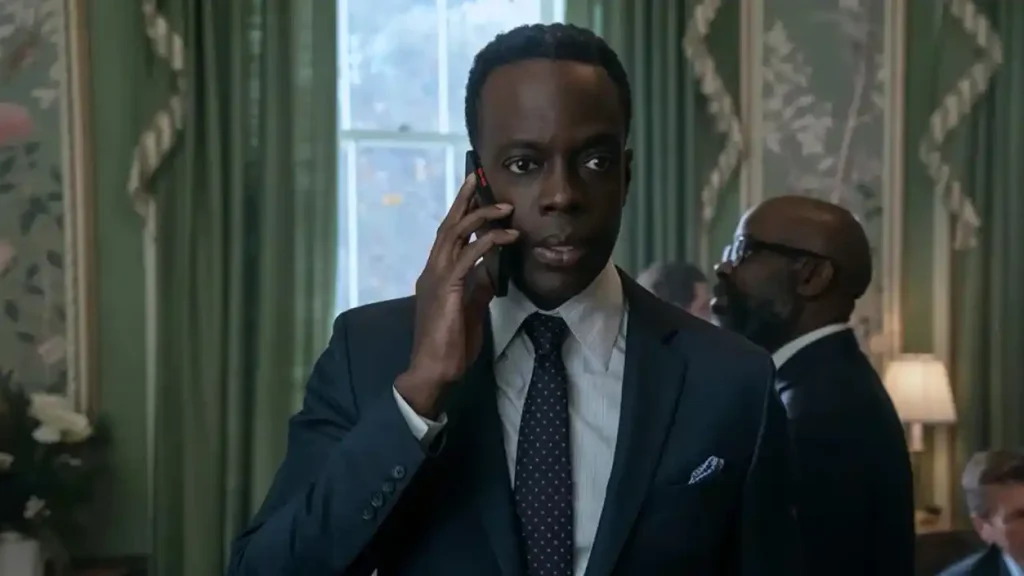
The finale saves its biggest question for the very last moment. Outside the summit venue, Kate approaches the waiting journalists and announces that the Vice President wants to make a statement. Hal steps up to the microphones, ready to address the press, but before he says a word, the screen cuts to black.
It’s an obvious cliffhanger, but it works because Hal’s next move could change everything. Is he about to expose the submarine operation and admit his own role in it? Will he call for Penn to step down, or is he going to frame the walkout as a protest against her leadership without revealing everything he knows? The finale doesn’t give us an answer, and that’s the point. Hal has the attention of the world, but we don’t yet know what he’s prepared to do with it.
His position makes the moment especially complicated. As Vice President, he is one of the few people who could seriously challenge Penn from inside the executive branch. But he isn’t an innocent outsider who has just discovered her misconduct. He helped arrange the operation in the first place. If he chooses to reveal what happened, he could damage Penn’s presidency, but he may also expose himself to serious political and legal consequences. Whatever he says, there will be no easy way back.
What Does the Ending Mean for The Diplomat Season 5?

Season 5 now has a much bigger fight to deal with than the usual diplomatic standoff. Penn is facing a rebellion from people who were supposed to be working for her, and the public nature of their walkout makes it difficult for the White House to brush the whole thing aside. Kate, Billie, Ganon, and Hal have all put themselves on the other side of the president, but it’s not yet clear whether they’re united by a shared plan or simply by the belief that Penn has gone too far.
Hal’s statement will likely be the first major piece of that puzzle. If he exposes the secret operation, the fallout could reach Congress and put the president’s position in real danger. If he stops short of revealing the full story, the group may have to find another way to challenge her. Either way, the submarine crisis isn’t going to disappear just because the summit has ended.
Stuart’s situation could matter just as much. His forced return to Washington gives him a direct connection to the administration’s retaliation against dissent, and he may be in a position to explain how Penn’s team has handled internal objections. But the finale hasn’t confirmed that he’ll testify or that the group already has a plan to bring the president down. For now, those are possibilities rather than certainties.
The real shift is that Kate has finally stopped trying to make the administration work from the inside. For most of the series, she has been stuck managing the consequences of decisions made by people whose judgement she doesn’t trust. Walking out at the G7 means she is no longer willing to keep doing that on Penn’s terms. With Hal standing beside her and the world watching, the next season could turn the show’s usual political manoeuvring into a direct fight over the presidency itself. And after that final cut to black, the question isn’t just what Hal will say. It’s how much of the truth he’s willing to bring into the open.
About the Author