 James Oconner

 Anil Krishna
 Jonathan Millar


Silo Season 3 Finale Explained: How Many Years Have Passed Since the Nuclear Disaster?

© Apple TV+
One of the biggest questions hanging over Silo has always been how long humanity has been living underground. The Season 3 finale finally gives us a much clearer idea, and the answer is around 350 years. That’s roughly how much time has passed between the nuclear disaster that separated Daniel Keene and Helen Drew and the events involving Juliette Nichols in the present day.
The reveal comes in the finale, titled “Troy,” which takes a closer look at what happened to Daniel after the world fell apart. Played by Ashley Zukerman, Daniel isn’t some distant ancestor or a relative of the man we see in the present. He’s the same person, still alive after centuries, thanks to the cryogenic technology inside Silo 1. While the other silo residents have lived and died over generations, Daniel has spent much of that time frozen, waking up only when the people running the project need him.
That changes how we look at the show’s flashbacks. Daniel and Helen’s story initially feels like something that happened in a world long gone, with little connection to Juliette’s life beyond the disaster itself. But the finale makes it clear that the past never really went away. The people in charge have been preserving the system for centuries, bringing certain individuals back whenever a crisis needs to be dealt with. To understand the timeline, it’s worth looking at three key events: the nuclear disaster, the massacre during the Silo 17 uprising, and the rebellion in Silo 18.
From the Nuclear Disaster to Daniel’s Life in Silo 1

The timeline starts with the nuclear explosion shown in the episode before the finale. Daniel and Helen are separated as the world they know comes to an end. Daniel is taken to Silo 1, the project’s central control facility, while a pregnant Helen ends up in Silo 18. From that moment, their lives take very different paths. Helen has to live in a silo where people grow old, have children and pass their lives down through generations. Daniel, on the other hand, gets access to technology that the residents of the other silos don’t have. Silo 1 has advanced surveillance, sophisticated infrastructure and cryogenic chambers that allow people to be kept alive for long periods without aging normally.
But staying alive comes with a pretty disturbing price. Daniel’s body is preserved, while his memories are deliberately suppressed. His identity is essentially replaced with a new one: Troy. The man who once knew Helen and understood the world before the disaster is turned into someone who follows the project’s orders without questioning them. It’s a particularly grim part of the story because Daniel hasn’t simply been kept alive. The people running Silo 1 have also worked to erase the person he used to be.
This is also why the line about seven years in the finale can be misleading. When Dr. Victor Crnkovich wakes Troy and tells him that seven years have passed, he’s talking about the time since Troy’s last cryogenic sleep cycle, not the time since the nuclear disaster. Daniel has already been awakened and put back into stasis several times over the centuries. He hasn’t spent 350 years awake, watching the world change around him. Instead, his life has been broken into short periods of activity separated by long stretches in which he barely ages.
The Silo 17 Massacre Happened 35 Years Before Juliette’s Story
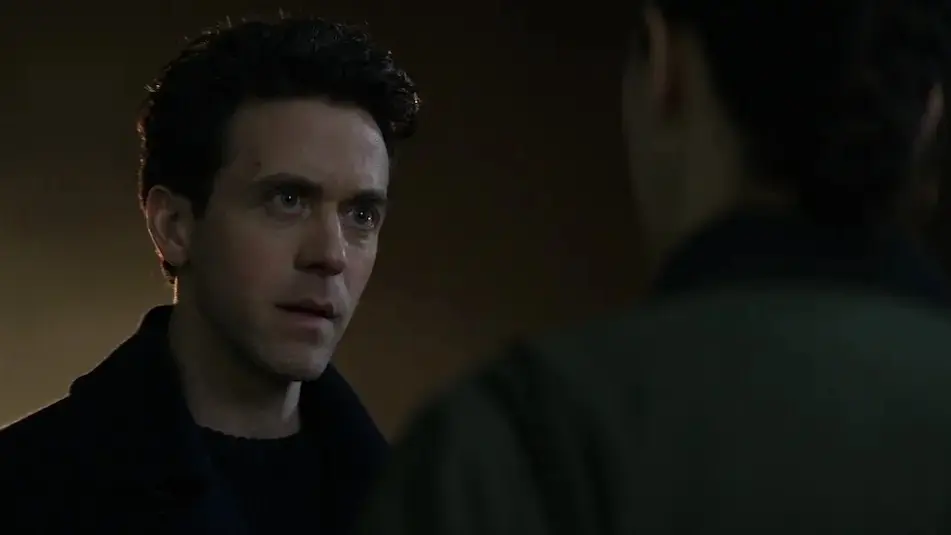
One of the most important points on the timeline is the uprising in Silo 17, which took place around 35 years before the main events of Silo. The show has already given us glimpses of this tragedy through Jimmy, the child who survived the destruction of his community and later became the isolated figure known as Solo. During the uprising, thousands of Silo 17 residents try to escape to the surface. From Silo 1’s perspective, this isn’t just a rebellion inside one bunker. The people escaping could reach other silos and potentially expose secrets that the project has spent centuries trying to keep hidden. So the response is brutal.
Troy is brought out of cryogenic sleep and tasked with stopping the escape. Using drones and lethal agents, he oversees an operation that kills nearly all the people attempting to flee. It’s a horrible moment, made worse by the knowledge that Troy is actually Daniel, the same man who once loved Helen and lived through the end of the old world. Somewhere along the way, the system has turned him into an efficient instrument of its own cruelty. There’s another unsettling detail here. During the operation, Troy encounters Susan, a drone officer who is actually his sister, Charlotte. Neither of them recognizes the other. The project has done more than preserve their bodies and use them when needed; it has stripped away the memories that might have allowed them to recognize their own family.
The massacre also connects Daniel’s story directly to Juliette’s. The bodies outside Silo 17 and the ruined community she eventually discovers are consequences of an order given by someone who lived through the original disaster centuries earlier. Once the operation is over, Troy is placed back into cryogenic sleep. When he wakes again, another 35 years have passed, and Silo 18 has become the new problem for the people in charge.
Why the Season 3 Finale Reveals a 350-Year Gap

By the time Troy wakes during the Silo 18 uprising, roughly 350 years have passed since the nuclear disaster. That’s the total time separating Daniel and Helen’s world from Juliette’s, not the length of one continuous cryogenic sleep. Think about what that means for the people living underground. Generations have been born and died without knowing exactly where the silos came from or why the system works the way it does. The rules have become part of everyday life, while the people who designed and maintain them have had centuries to keep the truth buried.
Inside Silo 18, Juliette and her allies manage to stop the Safeguard protocol, which is designed to wipe out a silo when its residents are considered too difficult to control. The failure of that plan becomes a turning point for Victor, who has spent centuries maintaining the system and acting as the human voice behind the Algorithm. Unable to live with the consequences any longer, he takes his own life, leaving Troy to deal with Juliette directly. Juliette eventually finds a hidden door deep inside Silo 18 and begins to understand just how much control comes from outside her community. Troy offers a truce: Silo 18 will be left alone as long as its residents stop trying to contact the other silos. Juliette appears to accept the deal, but she has no intention of simply trusting him. She’s already thinking about how to strike back at the control center.
The finale’s most personal moment, however, has little to do with the uprising itself. Before his death, Victor leaves Troy a message that reveals the name of the woman he has been unable to fully forget: Helen Drew. For a moment, the identity forced onto Troy seems to crack. He may have been conditioned to follow orders, and much of his past may have been wiped away, but something of Daniel is still there. After roughly 350 years, the memory of Helen has survived in some form, buried beneath all the attempts to erase it. It’s a small opening in the system’s control over him, but it could turn out to be important.
Could Juliette Be Connected to Daniel and Helen?

The 350-year gap also raises a question about Juliette’s own family history. Helen was pregnant when she entered Silo 18, which means she may have had a child after the disaster. If that child survived and the family line continued, it’s possible that some of the people living in Silo 18 today are descendants of Helen and Daniel. The finale hints at a possible connection through similarities between Daniel’s eyes and Juliette’s, but it doesn’t confirm that they’re related. For now, the idea remains a theory rather than an established part of the story. The fourth and final season may provide an answer, but the show hasn’t settled the question yet.
Even without a confirmed family connection, the contrast between Daniel and Juliette is interesting. Daniel was there when the world ended, but the people running Silo 1 have taken away most of his ability to understand his own past. Juliette was born centuries later and has spent her life trying to uncover the very history that Daniel has been forced to forget. That’s really what the timeline reveals about Silo. Time isn’t just a way of making the apocalypse feel distant. It’s part of how the system keeps people under control. The residents live their lives without knowing the truth, while Silo 1’s chosen operatives are brought back across generations to make sure things stay that way. The project has survived for centuries, but only by taking away people’s memories, relationships and freedom to decide what they want to do.
What the 350-Year Timeline Means for Silo Season 4

The Season 3 finale clears up several major questions. The nuclear disaster happened around 350 years before Juliette’s story, Troy is Daniel Keene, and his repeated awakenings are part of the system Silo 1 has used to maintain control over the silos. The massacre in Silo 17, which took place around 35 years before the present-day events, is one example of how that system operates whenever a community threatens to break free.
But the biggest revelation may be the simplest one: Daniel hasn’t completely forgotten Helen. The name still means something to him, even after centuries of cryogenic sleep and deliberate memory suppression. If that connection can help him recover the person he once was, Juliette may have found a weakness in a system that has controlled the silos for generations.
Whether one surviving memory is enough to bring the whole operation down is another matter. That’s the question Silo leaves hanging as it heads into its fourth and final season.
About the Author