 James Oconner
 Anil Krishna
 Jonathan Millar
What Really Happened at Tumbleton? Fire & Blood Book Lore vs. House of the Dragon
© HBO
Tumbleton is one of the most important and brutal turning points in the Dance of the Dragons. With House of the Dragon Season 3 using the First Battle of Tumbleton as its climactic finale, the series has finally reached one of the events that Fire & Blood readers have been waiting to see brought to life. And, as expected, it is every bit as chaotic and devastating as the book suggests.
In George R.R. Martin’s Fire & Blood, Tumbleton becomes the site of two devastating battles involving some of the most powerful dragons in Westeros, including Vermithor, Silverwing, Seasmoke and Tessarion. More importantly, it is where the consequences of Rhaenyra Targaryen’s decision to recruit the dragonseeds become impossible to ignore. What initially looks like a desperate but successful attempt to strengthen the Blacks eventually creates a problem of its own.
Much of the story revolves around Hugh Hammer and Ulf the White, the two lowborn dragonriders who become known as the Two Betrayers. Their arrival gives the Blacks badly needed firepower, but neither man remains loyal for long. Fire & Blood largely remembers them through the accounts of Westerosi historians, while House of the Dragon has taken more time to establish who they are as people. The show has also made several changes to the timeline and their individual arcs, which makes the events at Tumbleton play out differently on screen.
What Happens at the First Battle of Tumbleton?
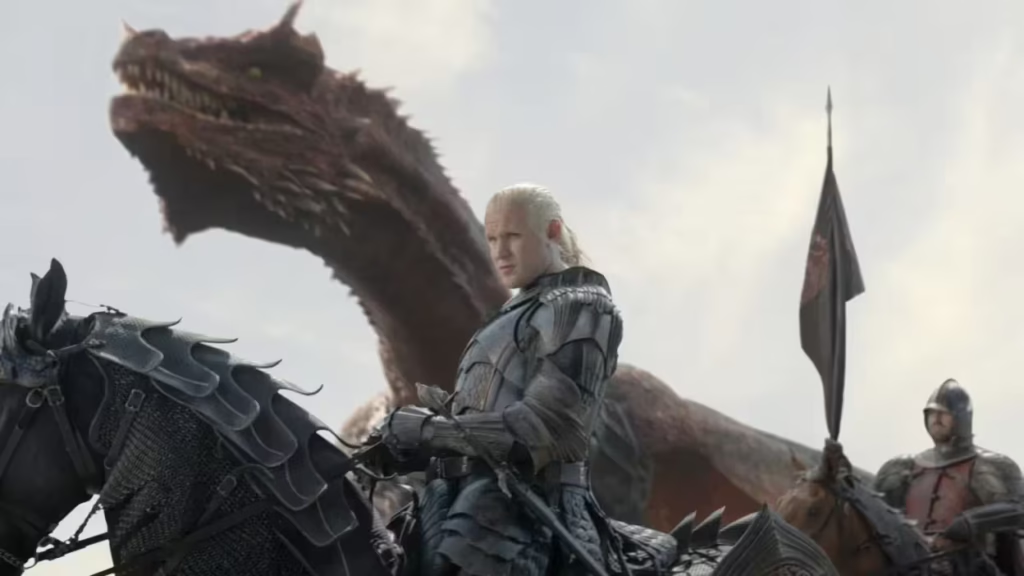
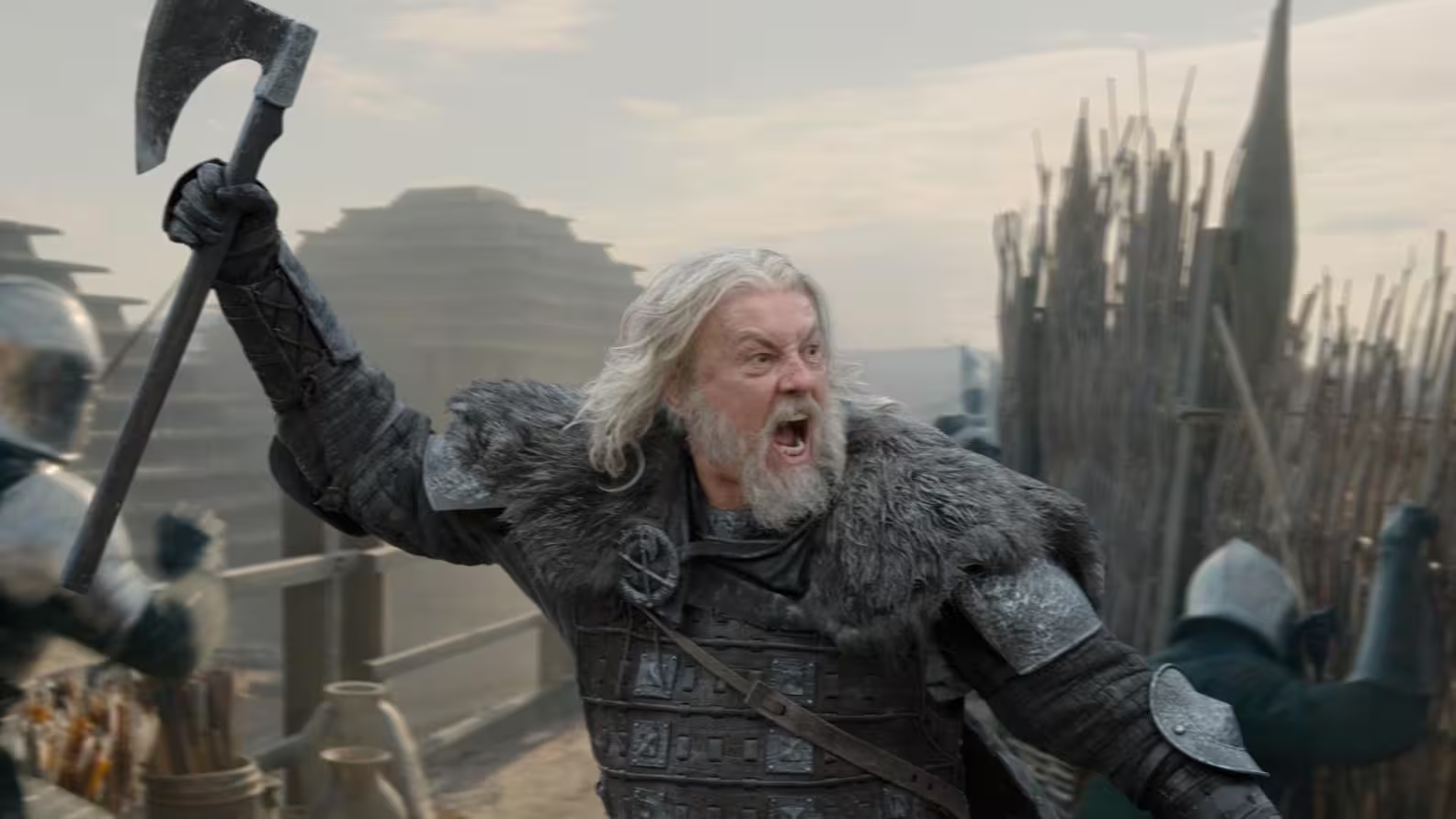
As seen in the Season 3 finale, the First Battle of Tumbleton begins as Lord Ormund Hightower‘s Green forces advance through the Reach. The Blacks are under enormous pressure, but Lord Roderick Dustin and the Winter Wolves arrive to reinforce them. The northern soldiers make an immediate impact, with Roddy the Ruin leading the attack that kills Ormund Hightower before Dustin himself eventually falls.
For a moment, it looks like the Blacks have pulled off a major victory. Then everything starts to unravel.
Ulf the White, who has claimed Silverwing, turns against the Blacks and unleashes dragonfire on Tumbleton. The resulting destruction turns the town into a nightmare, with the people living there caught directly in the middle of a war between two Targaryen factions. The sack is one of the clearest examples of how quickly the Dance can move beyond the control of its supposed leaders.
However, House of the Dragon makes an important change to Hugh Hammer’s role in the first battle. Rather than immediately betraying Rhaenyra alongside Ulf, Hugh leaves the aerial fight and searches for his wife on foot through the burning streets of Tumbleton. That decision gives the character a much more personal connection to the destruction around him. Vermithor is effectively left without his rider for a time, while Hugh’s eventual betrayal is pushed further down the road.
It is a small change compared with some of the show’s larger departures from Fire & Blood, but it matters. The series has spent considerable time establishing Hugh’s concern for his family and his anger over the suffering caused by the war. His actions at Tumbleton fit into that larger story rather than simply making him another character who suddenly decides to switch sides.
What Happens at the Second Battle of Tumbleton?
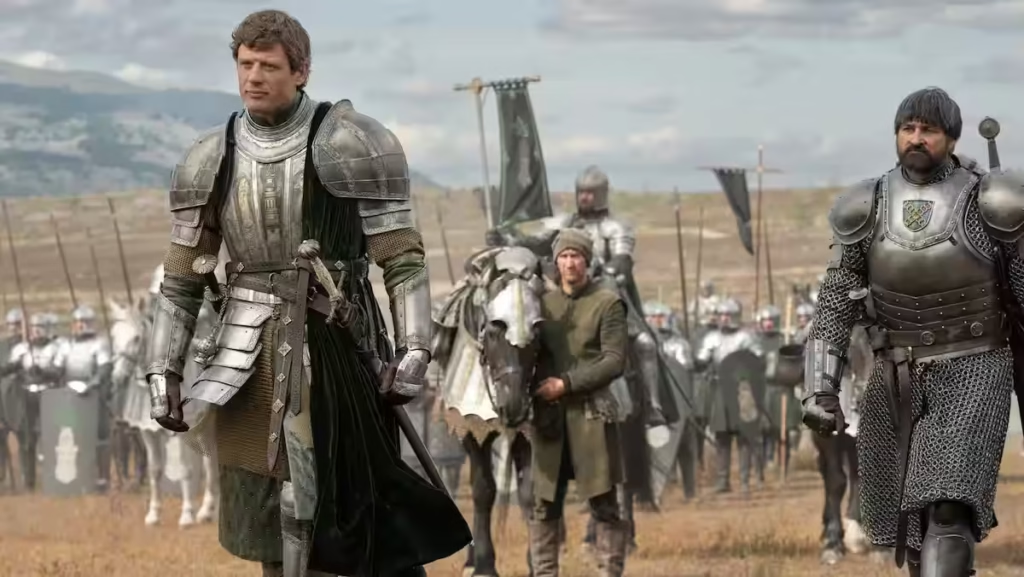
The Season 3 finale covers the first sack of Tumbleton, but the second battle remains part of the story still to come. If House of the Dragon follows the broad events of Fire & Blood, Tumbleton is far from finished.
In the book, Hugh Hammer becomes increasingly ambitious after the first battle. His confidence grows to the point that he begins considering the possibility of claiming the Iron Throne himself. That puts him at odds with practically everyone around him, while Ulf’s own reputation for selfishness and irresponsibility makes the situation even more unstable.
Meanwhile, Ser Addam Velaryon is fighting a battle of his own. Rhaenyra’s growing suspicion of the dragonseeds puts Addam in danger after Hugh and Ulf’s betrayal, and he becomes determined to prove that the actions of two men should not condemn every dragonseed. He mounts Seasmoke and launches a surprise night attack on Tumbleton in an attempt to redeem himself and the reputation of the other dragonseeds.
The battle ends in one of the bloodiest sequences of the Dance. Vermithor, Seasmoke and Tessarion are all killed during the fighting, while Hugh Hammer and Prince Daeron Targaryen also die. Several of the war’s most important dragons are wiped out in a single confrontation, leaving both sides significantly weaker.
Tumbleton therefore becomes much more than a battle for control of the Reach. It demonstrates what happens when the Dance’s most destructive weapons are allowed to dictate the course of the war.
How Does House of the Dragon Change Hugh Hammer and Ulf the White?
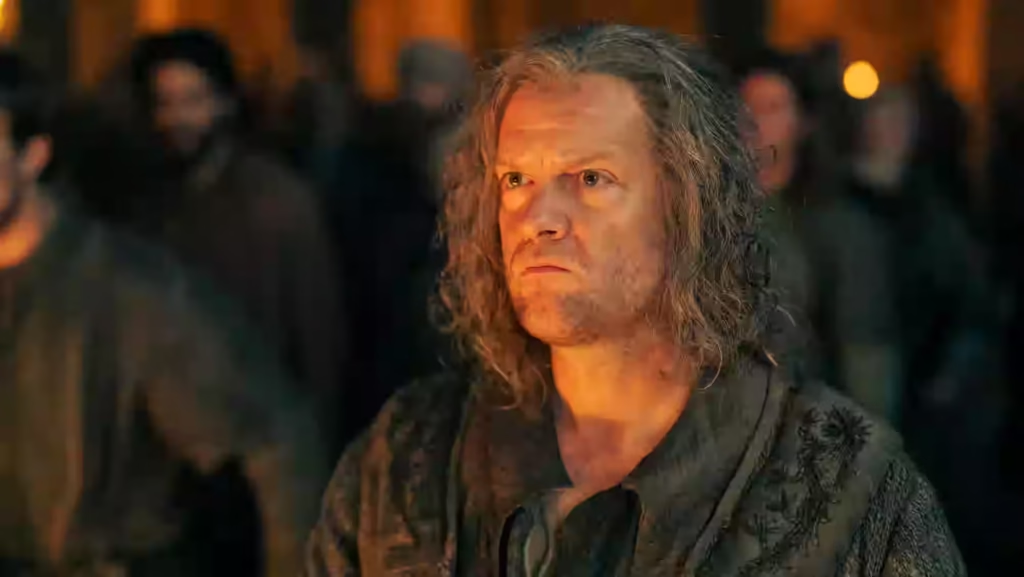
The biggest difference between the book and the series is probably the amount of attention given to Hugh and Ulf before they become the Two Betrayers.
In Fire & Blood, the two men are largely remembered as ambitious dragonseeds whose sudden rise to power ends in treachery. Their lowborn origins are also important because the book’s historical accounts tend to reflect the prejudices of the society in which they lived.
House of the Dragon gives Hugh considerably more depth. He is portrayed as a working-class blacksmith who has watched ordinary people suffer while the Targaryens continue fighting over the Iron Throne. His concerns about food shortages and the treatment of the smallfolk make his anger feel much more personal than simple greed.
That does not excuse what Hugh eventually does, but it does make his trajectory more complicated. He is not simply a man who gets a dragon and immediately decides he wants the throne. The series has shown a character who is already frustrated with the system before he is handed an extraordinary amount of power.
Ulf, meanwhile, is much more unpredictable. He quickly becomes enamored with the privileges that come with being a dragonrider and seems to enjoy the fact that people who once ignored him now have to take him seriously. Silverwing gives him enormous power, and his lack of discipline makes that power particularly dangerous.
That contrast between the two characters could become increasingly important if the series continues to follow their book arcs.
Why Are the Smallfolk So Important to the Tumbleton Story?
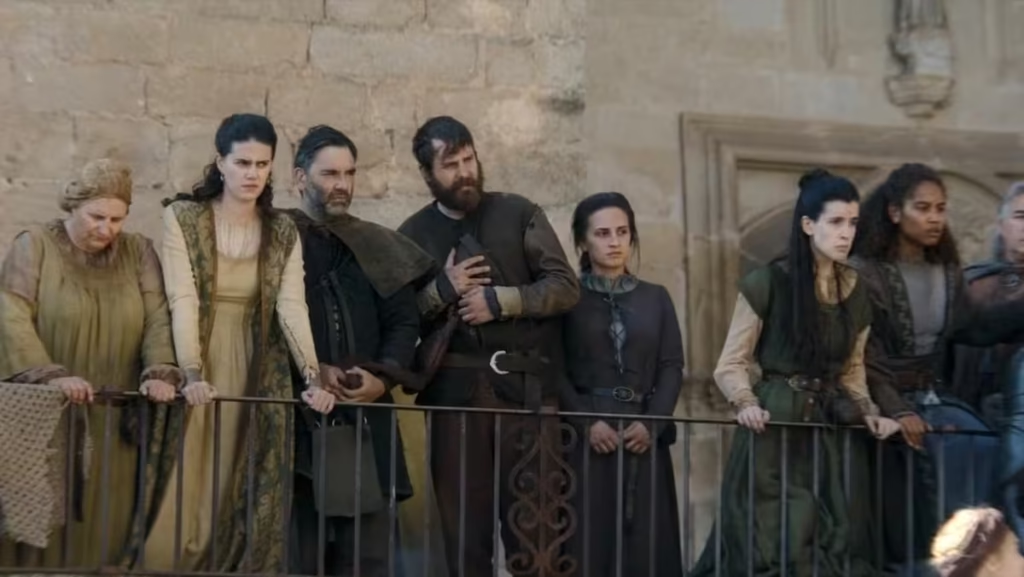
One of the most important themes surrounding Tumbleton is the cost of the Dance on ordinary people. The Targaryens are fighting over who deserves the Iron Throne, but the residents of Tumbleton have no say in the conflict. They are simply stuck in the middle of it.
The destruction of the town makes that imbalance impossible to ignore. Noble families can retreat, regroup and send more soldiers into battle. The smallfolk whose homes are burned down do not have that option. For them, a Targaryen victory does not necessarily look like a victory at all.
This has been a recurring theme throughout House of the Dragon. The series has made a point of showing the consequences of the civil war beyond the royal court, from food shortages to unrest among the population. Tumbleton takes that idea to an extreme because the destruction comes directly from the dragons themselves.
The creatures that are supposed to represent the unquestionable power of House Targaryen instead become instruments of mass destruction. And the people on the ground are the ones who suffer most.
Why Did Rhaenyra Recruit the Dragonseeds?
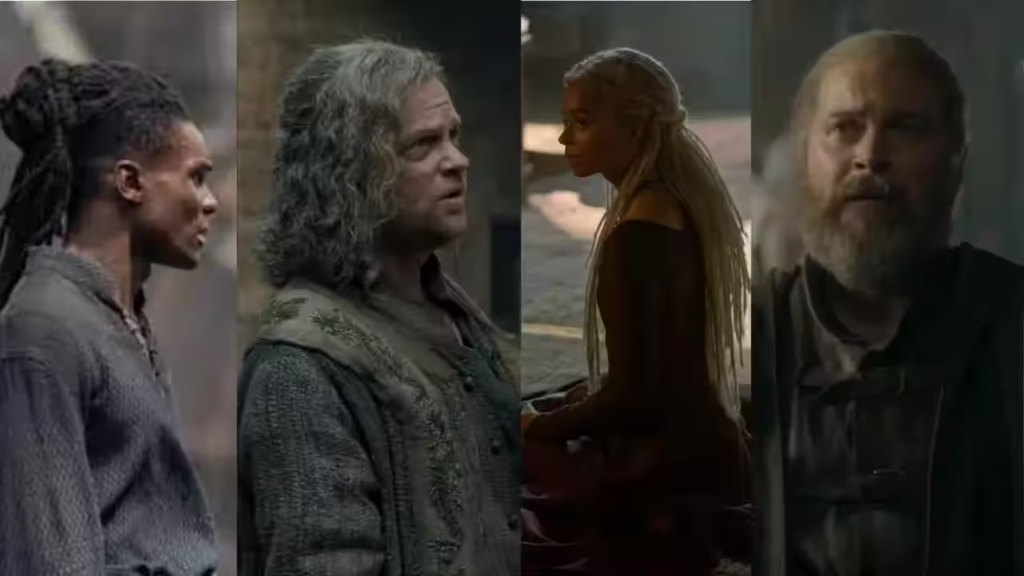
Rhaenyra’s decision to recruit the dragonseeds was essentially an act of desperation. The Blacks needed more dragonriders, but there were only so many members of the Targaryen family capable of claiming the remaining dragons. The Sowing of the Seeds gave people with Valyrian ancestry a chance to prove themselves worthy of riding a dragon.
The gamble pays off, at least initially. The Blacks gain several new dragonriders and suddenly have a much stronger position in the war.
The problem is that dragonriding ability and political loyalty are two very different things.
Hugh and Ulf go from being lowborn men with very little influence to controlling two of the most powerful creatures in the world. Their social position changes almost overnight, and so does the balance of power around them. Rhaenyra needs their dragons, but she cannot simply order the men riding them to behave.
That is ultimately what makes the dragonseeds such a dangerous gamble. Rhaenyra gains the military strength she needs, but she also gives people who have spent their entire lives outside the Targaryen power structure a weapon capable of challenging that very structure.
Tumbleton’s Importance in the Dance of the Dragons
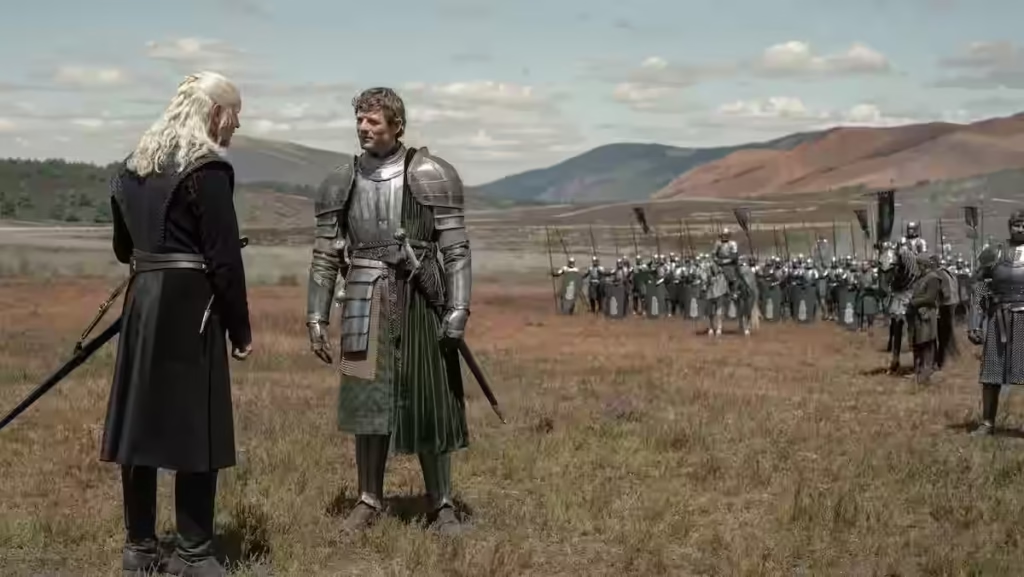
Tumbleton is far more than another battle in Fire & Blood. The two battles represent a major point of collapse in the Dance, particularly because of the number of dragons and important characters lost there.
The events also expose one of the fundamental weaknesses of Targaryen rule: dragons can provide almost unlimited destructive power, but they cannot guarantee obedience. A dragon may be capable of changing the outcome of a battle in minutes, but the person sitting on its back still has his own ambitions, fears and resentments.
The First Battle of Tumbleton is therefore an important ending point for Season 3 and an even bigger setup for what comes next. The show has spent time building Hugh and Ulf into characters with very different personalities and motivations, so their eventual betrayal has the potential to carry much more emotional weight than it does in the historical account of Fire & Blood.
The story also leaves House of the Dragon with one particularly uncomfortable idea to explore in its final season: Rhaenyra needed the dragonseeds because she was running out of options, but giving them dragons may have created an even bigger threat. By the time the Dance reaches its final stages, it is becoming increasingly clear that neither the Blacks nor the Greens are really in control anymore.
About the Author