 James Oconner
 Anil Krishna
 Jonathan Millar
The Tragedy of Tumbleton and Hugh Hammer and Ulf the White betrayal book differences
© HBO
Tumbleton is where the Dance of the Dragons really starts to feel like it has gone completely off the rails. What was once a prosperous town in the Reach becomes the setting for one of the ugliest episodes of the Targaryen civil war, with dragons, armies and ordinary people all caught in the same disaster. And the worst part is that Tumbleton isn’t just one battle. The town is dragged into the war twice, and both times the result is devastating. By the end, some of the Dance’s most powerful dragons and important players are dead, while the political damage reaches all the way back to Rhaenyra and her increasingly unstable rule.
What Happens at Tumbleton in Fire & Blood?
In Fire & Blood, the story of Tumbleton unfolds across two separate battles, and neither one goes particularly well for anyone involved. During the First Battle of Tumbleton, the Green army under Lord Ormund Hightower and Prince Daeron Targaryen moves toward the town while the Blacks try to hold their position. Rhaenyra’s forces have two enormous advantages in the form of Hugh Hammer and Ulf the White, the lowborn dragonseeds riding Vermithor and Silverwing. For a while, things actually look promising for the Blacks. Lord Roderick Dustin and his Winter Wolves launch a fierce attack and manage to kill Ormund Hightower, throwing the Green army into confusion.
Then everything falls apart.
Hugh and Ulf turn on the Blacks, and their dragons become the most terrifying weapons on the battlefield. Instead of protecting Tumbleton, they help destroy it, with dragonfire spreading through the town and civilians paying the price. The betrayal is especially damaging because Rhaenyra had taken a huge gamble by recruiting dragonseeds in the first place. She needed more dragonriders, but there was no guarantee that people suddenly handed enormous military power would remain loyal to her. Tumbleton is the moment that gamble comes back to haunt her.
The consequences go well beyond the town itself. Rhaenyra’s growing distrust of the dragonseeds eventually contributes to her decision to move against Nettles and Ser Addam Velaryon, two riders who had not betrayed her. That paranoia helps drive a wedge between Rhaenyra and Corlys Velaryon, further weakening the Black cause. Meanwhile, Hugh Hammer and Ulf don’t exactly make themselves popular with their new allies. Hugh begins entertaining the idea that he should be king, while Ulf expects a much greater reward for his role in the war. The Green leadership eventually decides that these two men have become too dangerous to leave alive, leading to the conspiracy against them.
And then comes the Second Battle of Tumbleton, which is somehow even more disastrous. Ser Addam Velaryon, desperate to prove that the dragonseeds are not all traitors, attacks Tumbleton at night aboard Seasmoke. The fighting quickly turns into complete chaos, with dragons tearing into one another above the town. By the time it is over, Vermithor, Seasmoke and Tessarion are dead. Hugh Hammer, Ulf the White and Prince Daeron are also killed. It’s one of the clearest examples in the entire Dance of how little control anyone actually has once dragons enter the fight.
How House of the Dragon Changes the Battle
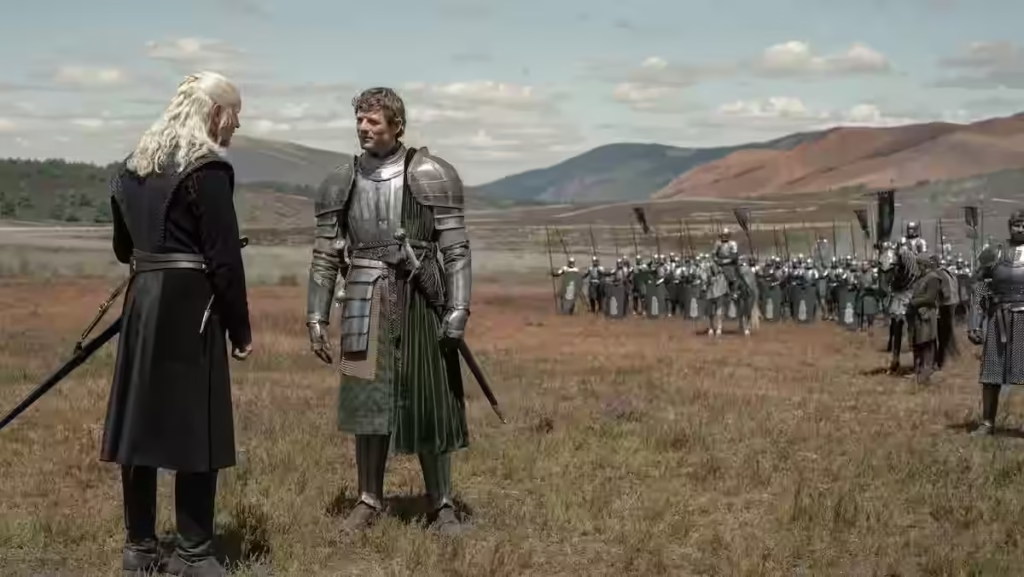
The television version of Tumbleton doesn’t simply recreate what happens in Fire & Blood. The show makes some pretty major changes to the circumstances surrounding the battle, including who is attacking, who is defending and why certain characters are even there in the first place.
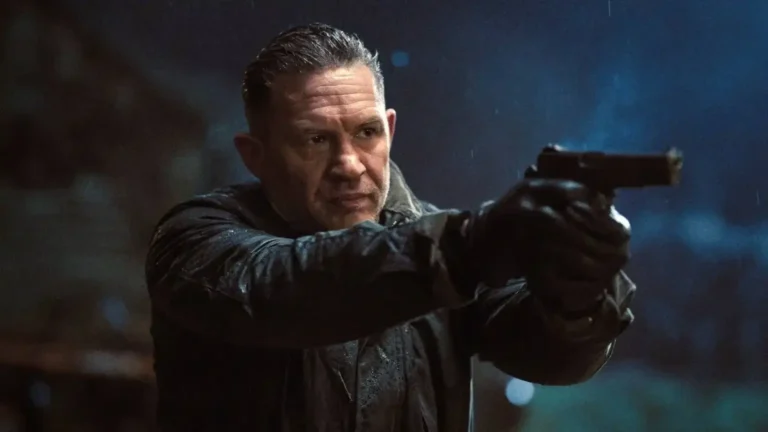
In the book, the Blacks are defending Tumbleton as the Green army advances. The show flips that situation around. Lord Ormund Hightower’s forces have already taken the town, turning the conflict into an attack by the Blacks. Prince Daemon Targaryen and the Northern forces are therefore trying to take Tumbleton back rather than simply stopping an approaching army. That change also gives the show more room to explore the uncomfortable reality of attacking a town where civilians are trapped in the middle of the fighting. The presence of children being used as human shields makes the situation even uglier, because suddenly the question isn’t simply which army wins. It’s how much destruction the characters are willing to cause to get that victory.
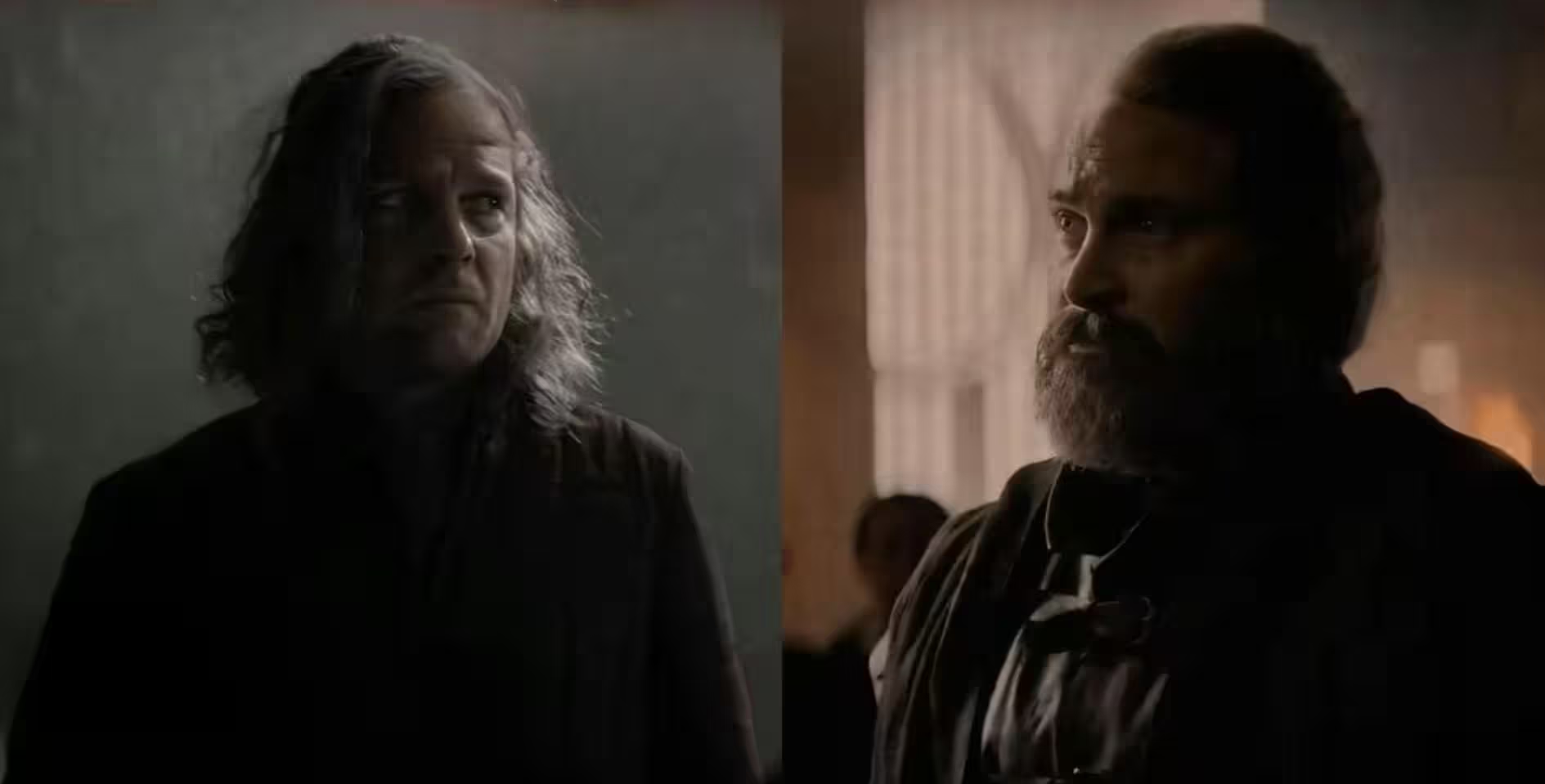
The show also changes Hugh Hammer and Ulf considerably. In Fire & Blood, the two are remembered largely as greedy opportunists whose betrayal helps turn Tumbleton into a disaster. House of the Dragon gives them much more individual motivation, which makes their actions harder to look at as simply black-and-white villainy.
Ulf, for example, is still reckless and self-interested, but his turn is tied to a deal with the Hightowers and his desire to protect himself. Once he has Silverwing, he is suddenly one of the most dangerous people in the entire war, and his lack of discipline becomes a serious problem. A dragon is one thing when it’s controlled by someone trained and focused. Put one under the control of someone who is drunk, frightened and angry, and things can go bad very quickly.
Hugh’s story is different. The show presents him as a working man and a family man who is desperately trying to find his wife, Kat, while Tumbleton burns around him. That changes the way his actions are viewed. Hugh isn’t standing there plotting to betray Rhaenyra and seize power. Instead, he becomes caught up in the chaos while Vermithor is left without his rider. The result is still horrific, but the tragedy comes from a very different place.
Daemon, Daeron and the Other Changes
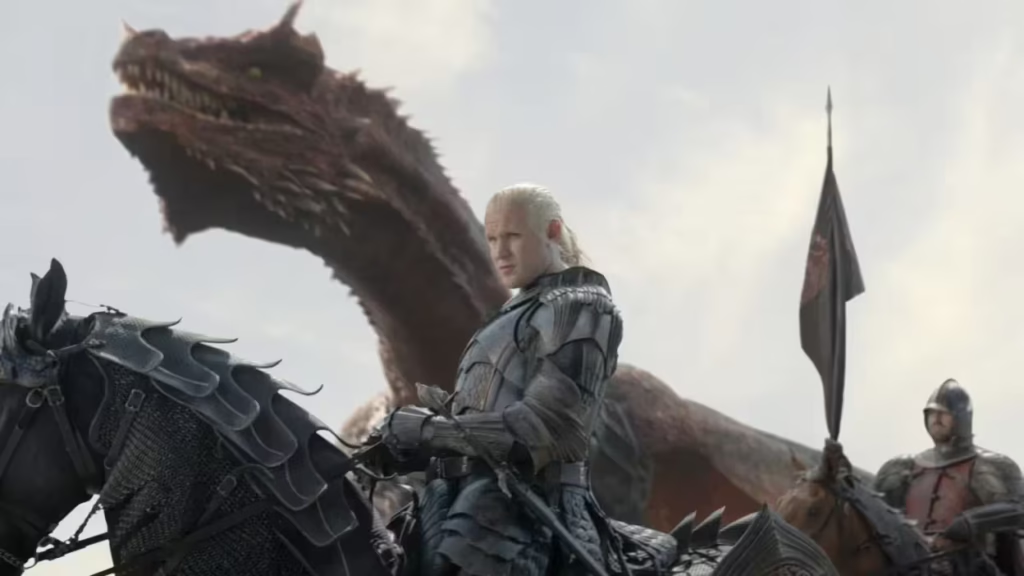
The battle also moves several important characters around compared with the book. Daemon isn’t present at the First Battle of Tumbleton in Fire & Blood, yet the show puts him directly into the action. His presence gives the battle a much stronger connection to the larger Black storyline and allows the series to keep one of its central characters involved in the season’s climax.
Prince Daeron’s role is changed as well. In the book, Daeron takes to the sky on Tessarion and plays an active part in the fighting. The show holds him back, with Ser Gwayne Hightower preventing him from immediately joining the battle. That leaves Daeron’s fate hanging over the aftermath and gives the series another mystery to carry forward.
There are other changes too, including the use of false peace negotiations and Gwayne’s involvement in the events surrounding Tumbleton. They all serve a similar purpose: making the battle feel less like a straightforward military engagement and more like a chain reaction where one bad decision leads to another.
Why Tumbleton Matters So Much
The importance of Tumbleton isn’t really about who wins the town. It’s about what happens to the people fighting over it.
The Dance has always been a war between two sides of the same royal family, but Tumbleton shows what happens when that conflict becomes too large and too violent for anyone to control. Dragons are supposed to be the ultimate advantage of the Targaryens. At Tumbleton, they become something closer to a liability. Once Vermithor, Silverwing, Seasmoke and Tessarion are unleashed, nobody can completely control where the destruction ends.
That’s also why the dragonseeds matter so much to this part of the story. Rhaenyra needed them because the Blacks simply didn’t have enough experienced dragonriders. Giving people like Hugh and Ulf dragons helped change the balance of the war almost overnight. But it also created a problem the Targaryens had never really had to deal with before: what happens when someone with no traditional claim to power suddenly possesses the kind of weapon that can decide the fate of kingdoms?
Tumbleton provides a pretty grim answer.
The tragedy is that ordinary people are caught underneath all of it. The Targaryens and their supporters can argue about succession, bloodlines and the Iron Throne, but the people of Tumbleton don’t get a say in any of it. Their homes are destroyed, their town becomes a battlefield and dragons turn the entire place into an inferno. That’s one of the things House of the Dragon has increasingly emphasized, and Tumbleton is perhaps the clearest example yet.
By changing some of the circumstances from Fire & Blood, the show isn’t necessarily losing the point of Tumbleton. If anything, it is making the tragedy more personal. The book gives us the historical record of a disaster. The series wants us to watch the people making the decisions that cause it—and then live with the consequences.
And there are going to be a lot of consequences.
About the Author