 James Oconner

 Anil Krishna

 Jonathan Millar


© Sony Pictures
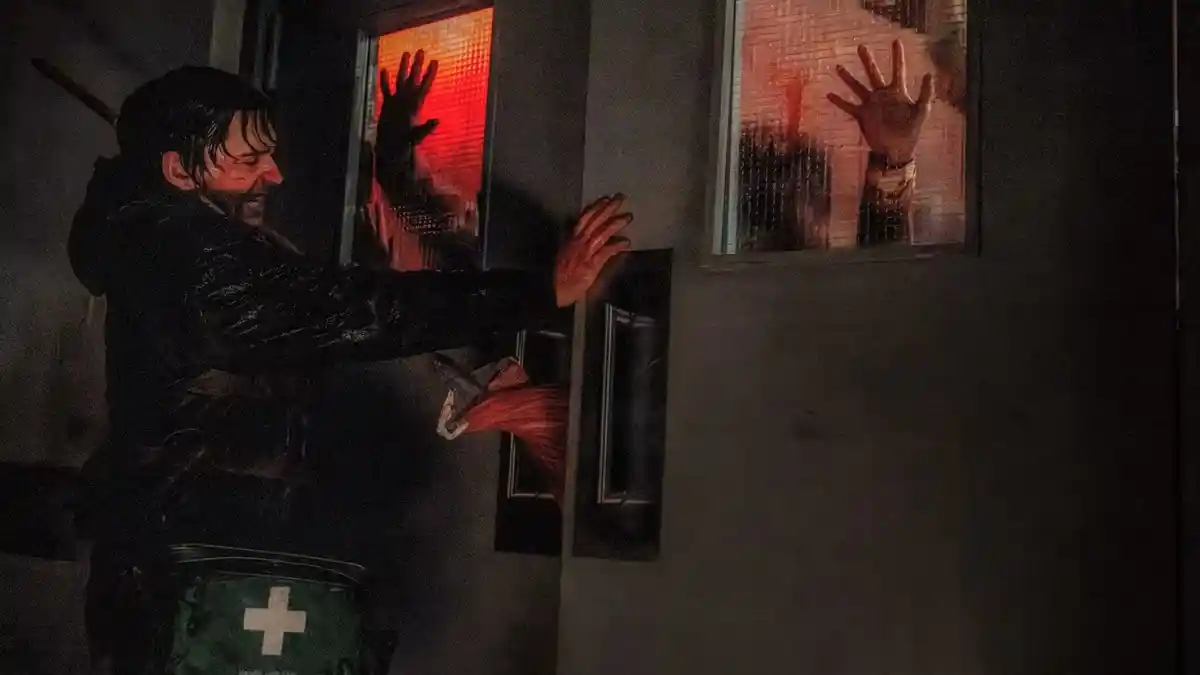
Zach Cregger’s new Resident Evil movie does something pretty interesting with the franchise. Instead of adapting one of Capcom’s games or bringing back familiar faces like Leon Kennedy, Jill Valentine or Claire Redfield, it tells a completely new story around Bryan, played by Austin Abrams. He’s a medical courier who gets caught up in a very bad night as everything around him starts falling apart. On paper, that sounds like a pretty big departure from the games, but Cregger clearly hasn’t forgotten where this story comes from.
The movie is packed with little pieces of Resident Evil history, and a lot of them are worked into Bryan’s journey rather than simply being thrown into the background for fans to screenshot. Some are obvious, while others are the kind of things you’ll probably miss unless you’ve spent an unreasonable amount of time wandering around Raccoon City or searching every room for supplies. That’s part of what makes the Easter eggs work. The movie doesn’t constantly stop to remind you that you’re watching Resident Evil. It just lets the details sit there and do their thing.
The Green Herbs Are Back
The Green Herb is probably one of the easiest Resident Evil references to spot. The healing item has been part of the games for decades, and it appears in the movie in a form that should look very familiar to anyone who’s played the newer entries in the series. Cregger has previously pointed to Resident Evil 4 as a major influence, and that connection is pretty obvious when some of these classic game items start appearing in Bryan’s world.
The First-Aid Spray gets a similar treatment. Instead of creating some random-looking medical prop that happens to fit the scene, the movie uses one of the most recognizable survival items from the games. For someone who doesn’t know the franchise, it’s just a can of medical spray. For a longtime player, it’s the thing you reach for when everything has gone horribly wrong and your health bar is looking dangerously low.
Yes, There’s a Typewriter
Then there’s the typewriter, another one of those objects that immediately screams Resident Evil to longtime fans. In the earlier games, typewriters were essentially safe havens where players could save their progress with Ink Ribbons. They became so closely associated with the series that simply seeing one can bring back memories of wandering through a mansion with barely any ammunition and wondering what nightmare was waiting in the next room.
The nice thing is that the movie doesn’t make a huge deal out of it. Bryan doesn’t stop and stare at the typewriter while the soundtrack tells us that we’ve just witnessed an Important Easter Egg. It’s simply there in the environment, which is probably the better way to handle something like this. Fans will recognize it immediately, while everyone else can keep watching without the movie explaining the joke.
The Shotgun Has a Very Familiar History
Bryan getting his hands on a shotgun is another pretty obvious nod to the games, although there are a couple of different Resident Evil moments it can bring to mind. The original game famously had its own shotgun-related trap in the Spencer Mansion, while Resident Evil 4 gave Leon a much more straightforward version of the moment when he finds a shotgun hanging inside a village house.
Considering how much Cregger has talked about Resident Evil 4, the latter comparison feels particularly appropriate. The influence isn’t just in the weapon itself, either. Ammunition boxes and other supplies scattered throughout the movie have the same familiar look as the items players have spent years picking up while trying to stay alive. Suddenly, Bryan searching an area for supplies starts to feel a lot like watching someone work through an actual game.
The Cerberus Brings Back One of the Series’ Classic Monsters
If you’re making a Resident Evil movie, eventually you have to let the dogs loose. The film’s mutated dogs, known as Cerberus in the games, are one of the clearest reminders of the franchise’s original creature design. They’ve been around since the first Resident Evil game in 1996, and their appearance here connects Cregger’s new story to the biological horror that helped define the series in the first place.
There’s something particularly effective about using the Cerberus rather than relying entirely on familiar human characters. You don’t need Leon or Jill to tell the audience that this is Resident Evil when a mutated dog comes charging into the picture. The monster does that job pretty well on its own.
The Camera Sometimes Feels Like a Game
Some of the film’s references aren’t things Bryan picks up at all. They’re hidden in the way the movie is shot. At certain points, the camera settles behind Bryan in a way that immediately recalls the third-person perspective associated with Resident Evil 4. In other moments, the framing becomes much more intimate and immersive, bringing to mind the first-person approach used in Resident Evil 7 and Resident Evil Village.
That gives the movie a nice way of acknowledging different eras of the franchise without forcing itself to look exactly like one particular game. The camera can change depending on what Bryan is experiencing, which means the influence is there without becoming a gimmick.
Locked Doors Are Basically a Character in Resident Evil
Anyone who has played the games knows that getting somewhere isn’t always as simple as walking there. There’s always a locked door, a missing key, a keycard that mysteriously isn’t where you need it to be, or some completely ridiculous object you have to find before the game will let you move forward. Cregger brings that same logic into the movie.
Bryan repeatedly encounters blocked routes and obstacles that force him to figure out another way through his surroundings. It sounds simple, but it helps create the same feeling the games are known for: you’re in a dangerous place, you don’t completely understand the layout, and every closed door makes you wonder what’s waiting on the other side.
That’s why these moments work better than a random reference thrown into the background. They’re actually part of how the movie moves. The locked doors and blocked paths aren’t just there because someone wanted another Resident Evil Easter egg. They help make Bryan’s journey feel like a game without turning the movie into a literal video-game adaptation.
There’s Even a Small Leon Kennedy Reference
Leon Kennedy may not appear in the movie, but that doesn’t mean Cregger completely ignores him. One of the more easily missed details is a background reference involving a firearms and ammunition shop bearing Leon’s name. It’s the kind of thing that can disappear into the scenery if you’re focused on Bryan, but eagle-eyed fans will probably spot it.
And honestly, this is probably the right level of Leon for this particular movie. Cregger has chosen to tell a new story rather than make another Leon adventure, so little references like this allow the film to acknowledge the character without suddenly making him part of Bryan’s plot.
Resident Evil 4 Is Clearly the Biggest Influence
Of all the games in the franchise, Resident Evil 4 seems to cast the longest shadow over Cregger’s movie. You can see it in the weapons, the supplies, the way Bryan moves from one environment to another and, more broadly, in the rhythm of the story. He gets pushed into a new location, encounters something worse than what came before, searches for what he needs and keeps moving because stopping isn’t really an option.
That’s what ties all these Easter eggs together. The Green Herbs, First-Aid Spray, typewriter, shotgun, Cerberus and even the camera work aren’t there just to make longtime fans point at the screen. They help recreate the particular feeling of playing Resident Evil — exploring somewhere you probably shouldn’t be, collecting whatever you can find and never quite knowing what is about to come through the next door.
And that’s probably the smartest thing Cregger does with the franchise. He doesn’t need to fill the movie with Leon, Claire or Jill just to convince people that it’s Resident Evil. The games have a whole visual and mechanical language of their own, and by borrowing from that language, the movie can tell its own story while still feeling like it belongs to the same strange, monster-filled world.
About the Author