 Anil Krishna

 Jonathan Millar


 James Oconner

Unabomber: The True Story of Ted Kaczynski Behind the New Netflix Film
© Netflix
There is something especially unsettling about the story of Ted Kaczynski because it doesn’t begin with a monster hiding in the woods. It begins with a teenage math prodigy who entered Harvard at just 16. Years later, that same man would become the target of one of the FBI’s longest manhunts after sending bombs through the mail for nearly two decades. From 1978 to 1995, Kaczynski’s campaign left three people dead and many more injured, while investigators struggled for years to figure out who was behind it.
That’s the real story Unabomber is working with. Directed by Janus Metz and starring Jacob Tremblay as a young Ted, Russell Crowe as psychologist Henry Murray and Shailene Woodley as FBI agent Joanne Miller, the film spends a lot of time on Kaczynski’s years at Harvard, particularly the psychological experiments he took part in there. And this is where things get a little complicated. The Harvard study really happened, and Kaczynski really was subjected to an extremely stressful experiment led by Murray. What isn’t established fact is the idea that the experiment somehow “created” the Unabomber or directly caused his later crimes. That connection is an interpretation, not something history has definitively proved.
And honestly, that distinction matters when looking at a movie like this. The broad facts of Kaczynski’s life are well documented: Harvard, his academic career, his move to Montana, the bombs, the manifesto, the FBI investigation and the role his brother David eventually played in identifying him. The more complicated question is how all those things fit together. That’s where the filmmakers have some room to interpret the story.
Ted Kaczynski Was a Harvard Prodigy Long Before Becoming the Unabomber

Kaczynski was born in Chicago in 1942 and showed an unusual level of intelligence from a very young age. He skipped several grades and entered Harvard in 1958, when he was only 16. He eventually earned a Ph.D. in mathematics and became a professor at the University of California, Berkeley. On paper, this was an extraordinary academic career.
But Kaczynski gradually walked away from that life. After leaving Berkeley, he moved to a tiny cabin near Lincoln, Montana, in 1971. The cabin was only about 10 by 12 feet, and Kaczynski chose a deliberately isolated, self-sufficient lifestyle there. Over time, his anger toward modern technology and industrial society developed into a much more extreme ideology. Eventually, that ideology became part of the justification he used for murdering and injuring people.
That transformation is a big part of what Unabomber is interested in. The film doesn’t introduce Kaczynski as a fully formed terrorist from the beginning. Instead, it shows a young man who is extraordinarily intelligent but increasingly disconnected from the people around him. Jacob Tremblay has also spoken about wanting to approach Kaczynski as a person rather than simply playing him as a stereotypical villain, which makes the character’s isolation more central to the story.
Still, there is a huge gap between being an isolated, unhappy student and becoming a domestic terrorist. That’s important to remember. Whatever happened during Kaczynski’s younger years, he later made his own decisions, spent years developing his beliefs and deliberately carried out the bombing campaign.
Henry Murray’s Harvard Experiments Really Happened
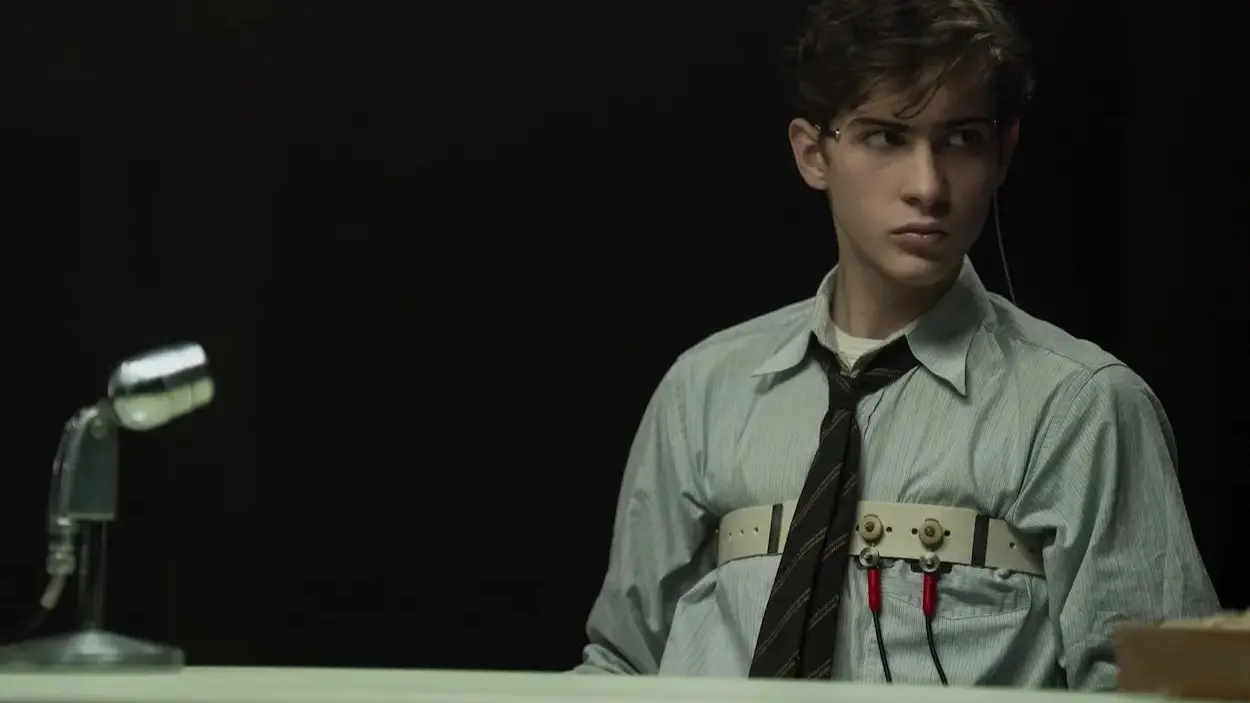
The Harvard section of the story is one of the stranger parts of Kaczynski’s biography because, unlike some of the film’s interpretations, the experiment itself is very real. While he was an undergraduate at Harvard, Kaczynski participated in a psychological study led by Dr. Henry A. Murray, who headed the Harvard Psychological Clinic. The study involved 22 students and was designed to examine how people responded to intense psychological pressure.
The participants were asked to write detailed accounts of their personal beliefs and philosophies. Those writings were then used against them during aggressive interrogation sessions in which researchers attacked their ideas and self-image. By modern standards, the methods are deeply troubling. Even Murray acknowledged how personal and intense the confrontations could be.
Where things become less certain is what effect the experiment actually had on Kaczynski. Some biographers have argued that it contributed to his later alienation, and Unabomber clearly finds that possibility dramatically interesting. But there is no solid evidence proving that the study caused Kaczynski to become the Unabomber. There were also many years between the Harvard experiment and his first bombing, during which Kaczynski completed advanced degrees, taught at Berkeley and eventually moved into his Montana cabin.
So the experiment is a real part of his history. Calling it the definitive “origin story” of the Unabomber is something else entirely.
The 17-Year Bombing Campaign

Kaczynski’s first known bomb was sent in 1978, beginning a campaign that would continue for 17 years. His targets included academics, scientists, computer experts and people connected to airlines. The devices became increasingly sophisticated, and the attacks eventually killed three people and injured nearly two dozen others.
The name “Unabomber” came from the FBI’s own case designation, UNABOM, short for University and Airline Bomber. Kaczynski worked from his isolated Montana cabin and built his devices using materials that could often be obtained without immediately drawing attention. He also took considerable care to avoid leaving evidence behind and, at times, deliberately planted misleading clues.
That caution helped keep investigators searching for years. The case became one of the FBI’s most frustrating investigations, especially because there wasn’t an obvious suspect waiting to be found. Kaczynski wasn’t a criminal living a flashy double life. He was living in a remote cabin and largely keeping away from society.
When agents finally searched that cabin after his arrest, they found something very different from the image of a simple wilderness retreat. There were bomb-making materials, journals and huge amounts of handwritten material documenting his ideas and activities. The contrast was disturbing: an extremely intelligent mathematician had turned his isolated home into a place where he could build bombs and continue a campaign he saw as an ideological fight.
The Manifesto That Finally Exposed Him

Kaczynski’s downfall came partly because he decided that his ideas needed to be heard. In 1995, he offered to stop the bombing campaign if major newspapers published his lengthy anti-technology manifesto. Authorities agreed to the publication, hoping that someone might recognize the language or ideas of the person who had written it. Someone did.
Linda Patrik, the wife of Kaczynski’s brother David, noticed similarities between the published manifesto and letters Ted had written years earlier. She raised her concerns with David, who eventually provided the letters to federal investigators. Linguistic analysis then found a strong match between the writings.
On April 3, 1996, FBI agents arrested Kaczynski at his Montana cabin. The search uncovered bomb components, thousands of pages of handwritten material and a bomb that was ready to be mailed. Kaczynski eventually pleaded guilty and was sentenced to life in prison without the possibility of parole in 1998. It is one of the stranger endings to the case. Kaczynski had spent years trying to stay invisible, carefully avoiding the kind of evidence that could lead investigators to him. In the end, his own writing helped point the FBI in his direction.
The Complicated Truth Behind the Netflix Film

This is probably the part of Unabomber worth keeping in mind while watching it. The Harvard experiment makes for a compelling explanation of where Kaczynski’s anger and isolation might have come from, but history isn’t quite that neat. There were years between the experiment and the first bombing. During that time, Kaczynski continued his education, became a professor and eventually chose to leave academic life behind. He spent years developing his anti-industrial beliefs before deciding to act on them violently. The Harvard study is part of that history, but it doesn’t explain everything that came afterward.
That’s also what makes the true story behind Unabomber more complicated than a simple “this happened, therefore he became a terrorist” narrative. The film can explore the psychological connections and suggest possible turning points, but viewers shouldn’t mistake those interpretations for established historical facts.
The major events are real. Ted Kaczynski was a Harvard prodigy. He really did participate in Murray’s controversial experiment. He really did move to Montana, carry out a 17-year bombing campaign and write the manifesto that ultimately helped expose him. His brother David really did play a crucial role in bringing the investigation to a breakthrough. What the movie is doing with those facts is the fictional part. And that distinction is probably the most useful thing to keep in mind while watching Unabomber.
Unabomber is streaming now on Netflix.
About the Author