
 James Oconner


 Anil Krishna

 Jonathan Millar

The Trap Review: Netflix’s German Thriller Keeps You Guessing, Until It Doesn’t
© Netflix
Based on Melanie Raabe’s novel, The Trap is a six-part German thriller about a bestselling author who has spent ten years shutting herself away from the world after her sister’s murder. Now streaming on Netflix, the series starts with a pretty unsettling question. What would you do if you suddenly saw the man you believe killed your sister on live television, after spending a decade wondering where he went? Would you call the police, confront him yourself, or start questioning whether your memories of that night can really be trusted?
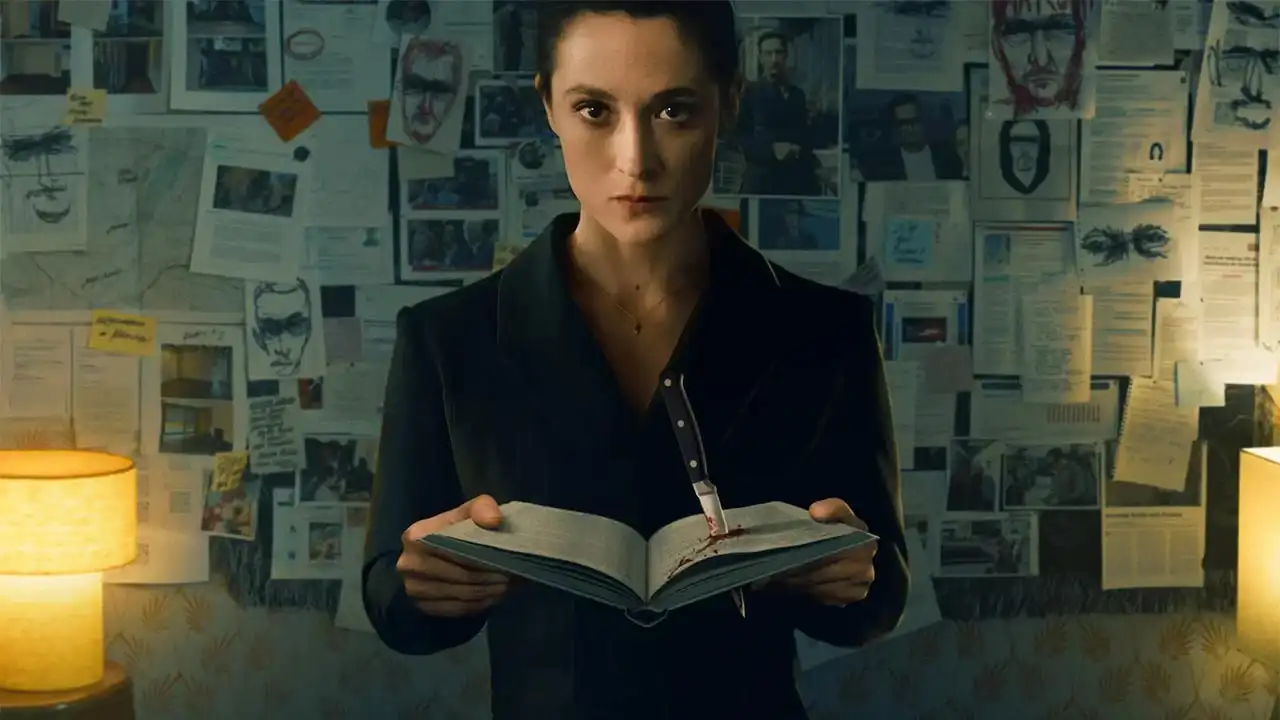
Lisa Konrad (Friederike Becht) has built a successful career as a novelist, but her personal life has been stuck in the same place for years. A decade earlier, she found her younger sister Anna brutally murdered in her apartment. Lisa caught a glimpse of the man fleeing the scene, but the police never managed to identify him, leaving her with a terrible memory and no real answers. The trauma eventually became too much to deal with, and panic attacks pushed her further into isolation. Her home became a refuge from the outside world, while writing was pretty much the only thing that gave her days some structure.
Then she sees a man on television who looks exactly like the person she’s been searching for all these years. He’s now living under the name Robert Lenzen (Hans Löw), working as an investigative journalist. Rather than simply contacting the authorities and hoping they’ll believe her, Lisa decides to take matters into her own hands. She offers Robert an exclusive interview about her upcoming book, giving him a reason to visit her home. If he’s really Anna’s killer, this could finally be her chance to confront him. The problem is that getting him through the door might be the easy part. Finding out the truth is going to be considerably messier.
A Mystery That Plays With Your Head
One thing The Trap makes clear fairly early on is that you shouldn’t believe everything you see. Lisa is a particularly interesting character for this kind of story because she’s a novelist, someone who spends her life creating narratives and deciding how the pieces fit together. But when it comes to her own past, things aren’t nearly so straightforward. She’s dealing with trauma, memories that have stayed with her for years, and the uncomfortable possibility that she might not remember that terrible night quite as clearly as she thinks she does.
That uncertainty gives the mystery much of its appeal. Just when you think you’ve worked out what’s happening, another detail comes along and makes you reconsider. Lisa has a plan, and on paper it sounds simple enough: use an interview to lure a possible killer into her home and get the answers she’s been waiting for. But she’s also trying to regain control over an event that has shaped the last ten years of her life. The closer she gets to Robert, the harder it becomes to tell whether she’s finally getting somewhere or walking straight into another disaster.
The first half handles this particularly well. Questions pile up, the characters keep their cards close to their chests, and the show doesn’t rush to explain everything just because the audience might want answers. There’s a similar interest in damaged people and deeply uncomfortable situations to what we saw in Dear Child, another German psychological thriller. The Trap doesn’t always reach those same heights, but there’s enough here to keep you watching, especially when it starts making you question your assumptions about Lisa herself.
Lisa and Robert’s Uncomfortable Game of Cat and Mouse
The scenes between Becht and Löw are easily among the strongest parts of the series. Their conversations have an awkward, tense quality because neither character is entirely easy to read. Lisa believes Robert is the man who murdered her sister, but belief isn’t proof, and she needs to be careful about what she reveals. Robert, meanwhile, has his own reasons for accepting the invitation. Whether he suspects what Lisa is really doing, or has some other plan in mind, isn’t always clear.
What’s fun about these exchanges is how much can change during what looks like an ordinary conversation. A seemingly harmless remark can make an earlier scene feel different, and both characters seem to be watching for the moment when the other one says a little too much. There’s no need for a chase or a fight every few minutes. The tension comes from watching two people sit across from each other, trying to work out what the other person knows. And, naturally, neither is particularly eager to give anything away.
Becht gives Lisa a convincing mix of vulnerability and determination. She’s clearly been affected by what happened to Anna, but she isn’t simply waiting around for somebody else to solve the mystery. She’s spent ten years living with the unanswered question, and now that she thinks she’s found the man responsible, she’s prepared to take a risk. Löw is equally difficult to pin down as Robert, which makes their scenes together all the more engaging.
The supporting characters add a few more complications along the way, offering new information without immediately clearing everything up. The trouble is that the show doesn’t handle every twist quite as well as it handles these smaller moments of uncertainty. As the story moves toward its conclusion, some developments start to feel a little too convenient, as though the plot is moving the pieces around because it needs to reach a particular destination. It’s not a disaster, but the mystery does lose some of its grip.
Lisa’s House Is More Than Just a Setting
After spending a decade avoiding the outside world, Lisa doesn’t suddenly decide to take her chances without thinking things through. Once she spots Robert on television, she begins preparing for the possibility that bringing him into her home could put her in serious danger. She takes self-defense classes, installs advanced surveillance equipment around the property, and starts working on a new crime novel inspired by her own experiences. It’s quite a change for someone whose life has revolved around staying away from people.
There’s an interesting contradiction here. Lisa’s house has been her safe place for years, somewhere she can shut out the world and live on her own terms. Now she’s deliberately inviting a man she suspects of murder into that same space. The home becomes both her refuge and the place where she hopes to confront the past. She wants to take back some control over her life, but there’s always the possibility that her plan will leave her in a much worse position than before.
The novel-within-the-story angle works nicely, too. Lisa is writing about crime while trying to make sense of a real tragedy, and the two things begin to overlap in ways that aren’t always comfortable. Writing can help her put her memories into some kind of order, but it can also encourage her to shape events around the version of the story she wants to believe. That’s an intriguing idea for a thriller about a novelist, even if the series occasionally seems a little too pleased with its own cleverness.
The Second Half Loses Some of Its Tension
For much of its first half, The Trap does a good job of making almost every new detail feel important. Lisa and Robert are still trying to figure each other out, the truth about Anna’s murder remains elusive, and it’s difficult to know which clues will actually matter. Even when you think you’ve spotted the direction the story is heading in, there’s enough uncertainty to keep you from feeling completely sure of yourself.
The later episodes have a tougher job. Eventually, the show has to answer the questions it has spent so long raising and bring Lisa’s confrontation with Robert to some kind of conclusion. Some of those answers work, but others feel rather too convenient. A few developments in the final stretch ask the viewer to accept things that haven’t been convincingly set up, and the writing starts losing the ambiguity that made the early episodes so engaging.
It’s a shame, because the setup is strong enough to carry the series further than it sometimes manages to go. The pacing remains reasonably solid, and the six-episode format means there’s not too much unnecessary melodrama or padding. The performances also help when the plot starts to wobble. Still, the show is at its best when it lets its characters remain difficult to understand, rather than trying to explain every last detail and tie everything up neatly.
The Verdict
The Trap is an engaging psychological thriller built around a simple but effective idea: a woman who believes she has found her sister’s killer decides to lure him into her home and confront him herself. The story has more going on than a standard cat-and-mouse chase, particularly in the way it deals with trauma, memory, and the stories people tell themselves to make sense of terrible experiences. Lisa isn’t just trying to discover who killed Anna. After ten years of living with that night, she’s also trying to work out whether she can trust her own mind.
The series does stumble as it approaches the finish line. Some of the later twists feel more convenient than convincing, and the second half doesn’t quite match the tension of the opening episodes. You may find yourself wishing the writers had trusted the mystery a little more instead of trying so hard to explain everything. Even so, Becht and Löw make a compelling pair, and their uneasy dynamic gives the story plenty of life.
If German psychological thrillers are your thing, The Trap is worth a watch. It doesn’t get everything right, and the ending may leave you with a few reservations, but the early episodes are genuinely effective at keeping you off balance. The real question isn’t just whether Robert is the man Lisa remembers from that night. It’s whether the past she’s spent ten years trying to understand is quite as clear-cut as she’s always believed.
About the Author



1 thought on “The Trap Review: Netflix’s German Thriller Keeps You Guessing, Until It Doesn’t”