 James Oconner

 Anil Krishna

 Jonathan Millar


Below Finale Explained: What the Icebergs Really Mean and Why the Squid Isn’t the Real Monster
© Apple TV+
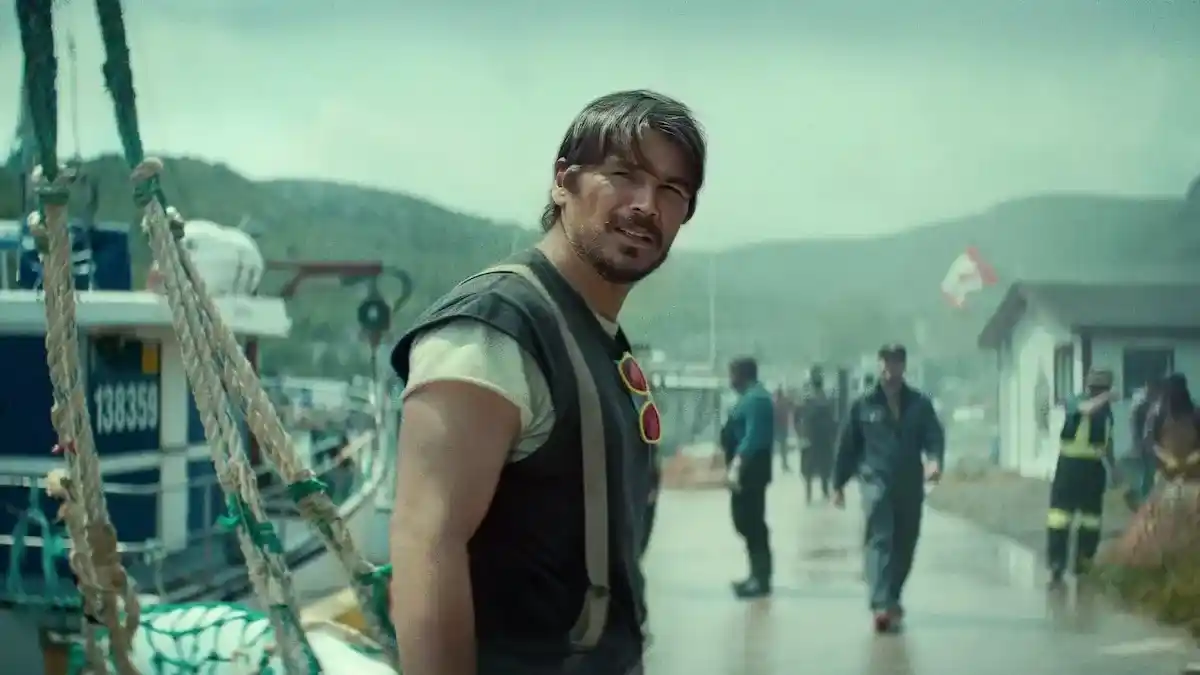
The finale of Netflix’s eco-horror series Below takes what initially looks like a fairly straightforward monster story and turns it into something much bleaker. The small Newfoundland community of Snook’s Arm is already dealing with a strange iceberg, deadly attacks, and an illness that nobody seems able to explain. Then the locals discover that something enormous is living beneath the water, and suddenly the town has a much bigger problem than anyone imagined. But the real surprise comes when Calvin Penney finally finds a way to deal with the creature. There’s no big victory celebration, no sense that everything is back to normal. Instead, Calvin and his family look out toward the horizon and see it crowded with more icebergs.
That final image changes how we understand pretty much everything that came before it. The giant squid was certainly dangerous, but it wasn’t the real cause of the disaster, and it wasn’t simply a monster that had decided to attack a fishing town for no reason. It was an animal driven out of its natural environment, desperately trying to protect its young. Meanwhile, Snook’s Arm is facing its own threat from people who see the town as little more than an obstacle to making money. By the time the finale ends, Below has moved well beyond the usual creature-feature formula. The squid is terrifying, sure, but the bigger horror is a world where environmental destruction and corporate greed leave both animals and people with fewer and fewer places to call home.
The Icebergs Are Actually Nests
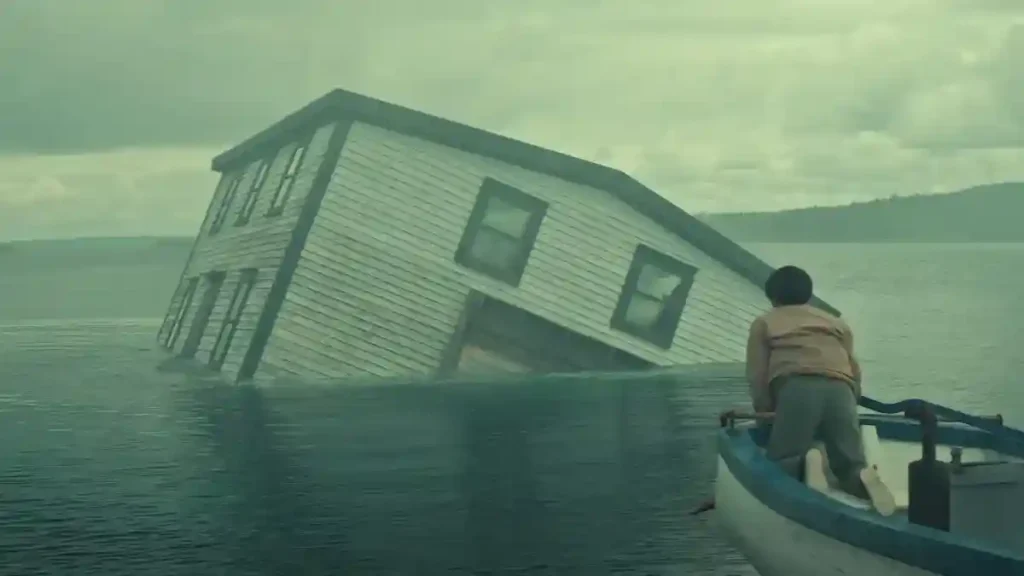
Calvin’s fear of what lies beneath the water goes back to 1986, when the residents of Little Pot Rock were forced to relocate to Snook’s Arm under a government resettlement program. During the move, the Penney family’s house was being towed across the water when it sank, killing Calvin’s father, Leo. The official explanation blamed a structural failure, but Calvin remembers seeing something huge moving beneath the surface. He was a child at the time, and nobody was particularly interested in listening to what he thought he saw. Forty years later, though, the same kind of terror seems to have returned just as Snook’s Arm faces the possibility of being uprooted all over again.
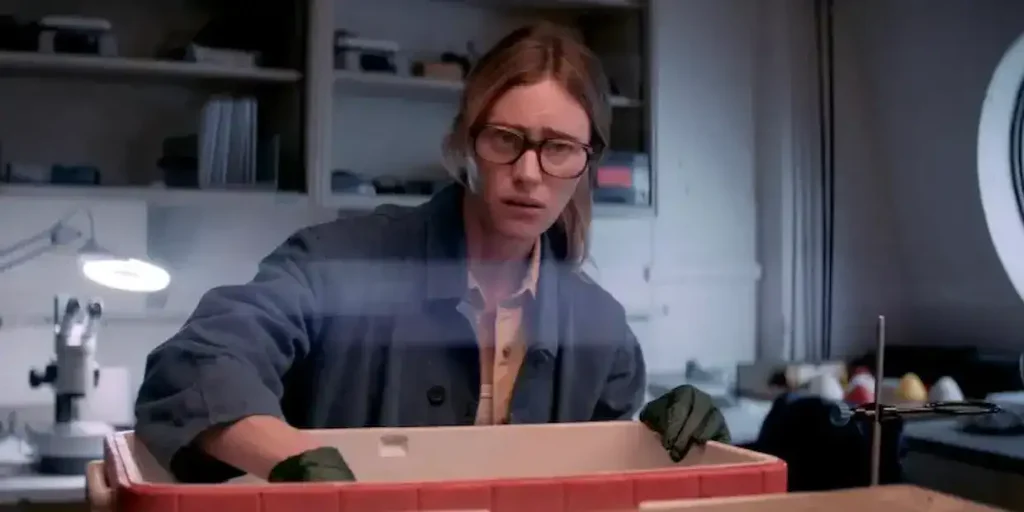
At first, it feels as if Calvin is caught in some horrible family curse. The iceberg appears, strange attacks begin, and the past starts creeping back into the present. Calvin makes his living harvesting ocean ice, so when a client rejects a sample because it appears contaminated, he brings it to marine biologist Fonda Howander for analysis. What she finds isn’t ordinary contamination. The ice is covered in a thick layer of organic mucus, which points toward something living beneath the surface. After footage of the attacks emerges, Fonda identifies the creature as a giant deep-sea squid, possibly the same animal responsible for Leo’s death all those years ago.
But the real revelation comes later, when the iceberg turns out to be something far stranger than a chunk of frozen water. It is an organic nest containing eggs. The squid hasn’t been hunting the people of Snook’s Arm for food or attacking the town simply because humans happen to be nearby. She is trying to protect her offspring, and the iceberg is where she has left them. That doesn’t make the attacks any less horrifying for the people caught up in them, but it does change the meaning behind the creature’s behavior. When the townspeople fire at the iceberg, they aren’t just trying to kill a predator. They’re threatening a mother and her unborn young.
Calvin eventually understands this, and instead of joining the military’s plan to destroy the creature, he comes up with another way to get her away from the harbor. With an airstrike looming, he takes his boat and uses a large net to tow the nest out to sea, drawing the squid away from the town. It’s a risky plan, but it works. Calvin doesn’t defeat the creature by being stronger or more heavily armed than she is. He survives because he finally understands what she’s trying to do. In a series filled with people reaching for guns and looking for someone to blame, that decision feels like a real change of direction.
The Squid Can’t Find Its Way Home

Unfortunately, getting the squid away from Snook’s Arm doesn’t mean she gets a happy ending. The creature belongs in the cold, stable waters of the high Arctic, where conditions are suitable for her eggs to develop. But warming oceans and melting ice have pushed her south along the Labrador Current, into waters that are simply too warm for her species. By the time she reaches Snook’s Arm, she is already in an environment where she cannot properly survive. The squid eventually dies, and her eggs fail to hatch. Calvin manages to save his town from an immediate disaster, but there’s nothing he can do to reverse the environmental damage that brought the creature there in the first place.
This is what makes the final scene so disturbing. When Calvin and his family return to harvesting ice, the horizon is no longer dominated by a single strange iceberg. Dozens of them now stretch across the water, forming a jagged line off the coast. Given what the audience has learned about the first iceberg, it’s hard not to suspect that these could be other nests, belonging to more creatures that have been driven away from their natural habitats. The series doesn’t need to show another squid attacking a boat or another group of villagers running for their lives. The sight of all those icebergs does the job on its own.
And Below doesn’t pretend the squid was harmless, either. She destroys vessels, kills people, and releases a toxin that drives its victims into the sea. The horror is real, and the people of Snook’s Arm have every reason to be afraid of her. But there’s a difference between acknowledging the damage an animal can cause and treating it as the source of every problem. The squid is acting on instinct, trying to protect her young in a place where she has no business being. Humans, meanwhile, know that their actions are changing the planet. We have the ability to recognize the damage and do something about it, yet the people with the most power often seem perfectly happy to carry on as usual.
Those icebergs suggest that Calvin’s solution was only ever a temporary one. He managed to move one nest away from the town, but what happens if dozens more creatures begin arriving along the coast? The oceans are changing, and wildlife will keep moving into unfamiliar territory as its own habitats become unlivable. More encounters with humans are almost inevitable. Calvin can save Snook’s Arm once, perhaps, but he can’t keep solving the same crisis forever.
The Real Monster Is on Dry Land
While the squid is causing chaos offshore, another threat has been hanging over Snook’s Arm for much of the series. A corporate resettlement scheme is quietly preparing to push residents out of their homes, and plenty of locals are tempted by the money being offered. The town has been struggling economically, so taking a payout and starting somewhere else doesn’t seem like such a bad deal to everyone. Calvin is one of the few people determined to stay, and at first his refusal can look like simple stubbornness or an inability to let go of the past. Then the truth about Little Pot Rock comes to light, and his resistance starts making a lot more sense.
The original relocation in 1986 wasn’t quite the well-meaning government intervention it was made out to be. Crocker Brewery and Distillery had discovered valuable deposits of copper and cobalt beneath the land, and the government buyout helped clear the way for mining. The people of Little Pot Rock were forced to leave their homes without knowing the full story behind the move. Their loss wasn’t just an unfortunate consequence of a government program. There was money to be made, and their displacement made it easier for someone else to get at it.
Now Crocker appears to be pulling the same trick in Snook’s Arm, using the language of modernization and economic opportunity to disguise what is really happening. The company wants control of another resource-rich area, and getting the residents out of the way is part of the plan. The squid’s arrival gives Crocker an opportunity it can hardly ignore. If a military airstrike destroys the harbor, the town’s fishing industry and local economy could be crippled, leaving residents with even fewer reasons to stay. The company can then push its buyout while presenting it as the only sensible option.
That’s why the company’s representatives continue lobbying for the bombing even after Calvin finds a way to lure the squid away. If the goal were simply to protect the town from the creature, his plan should have been enough to make them reconsider. Instead, the destruction of the harbor remains useful to them. The creature is a threat, certainly, but it also provides cover for a plan that was already in motion. Crocker doesn’t need to create the disaster. It just needs to make sure the disaster works in its favor.
Who Gets to Keep Their Home?

This is where the different strands of Below finally come together. The squid has been pushed out of its natural habitat by a changing climate, while the residents of Snook’s Arm are being pressured to leave their homes because a corporation wants what lies beneath them. Their situations aren’t identical, but the parallel is hard to miss. Both are being displaced by forces far more powerful than they are, and neither gets much say in what happens next. The squid’s struggle is a matter of survival. The town’s struggle is being engineered for profit.
By saving the harbor and preventing the airstrike, Calvin manages to break a cycle that began with the loss of his childhood home. This time, the town has a chance to fight back, and the discovery of the mineral deposits gives the residents a better understanding of what Crocker is really after. They are no longer negotiating without knowing what is at stake. But it would be a mistake to treat this as a complete victory. A corporation like Crocker can come back with lawyers, new offers, and other ways to pressure the community. Stopping the bombing doesn’t guarantee that Snook’s Arm will still be there years from now.
The same uncertainty hangs over the ending’s environmental warning. The squid is gone, but the conditions that drove her toward the town haven’t changed. Those icebergs on the horizon suggest that other creatures may already be on their way, and the next encounter might not end as peacefully. Calvin has found a way to save his community for now, but he hasn’t fixed the world that put it in danger.
That’s what makes the finale more unsettling than a conventional monster story. The obvious threat comes from the water, something enormous and deadly that people can see, shoot at, and try to drive away. The deeper threat is harder to fight because it comes from decisions made by people who may never set foot in Snook’s Arm at all. Below ends with the possibility that the town has survived one disaster only to face several more, while the creature that caused so much fear turns out to be another victim of the same broken system. The real horror isn’t simply that monsters exist. It’s that human greed and environmental destruction are making the world increasingly unlivable, and neither people nor wildlife seem to have anywhere safe left to go.
About the Author