 James Oconner

 Anil Krishna
 Jonathan Millar
How Samantha Morton’s Unsettling Circe Stole Christopher Nolan’s ‘The Odyssey’
© Universal Pictures
The casting of The Odyssey was an event in itself. When Christopher Nolan put together his formidable roster for the film – Matt Damon, Tom Holland, Anne Hathaway, Zendaya, Charlize Theron and Robert Pattinson among them – it was only natural that the industry would look to those marquee names to shoulder both the box office and the emotional burden of Homer’s old epic.
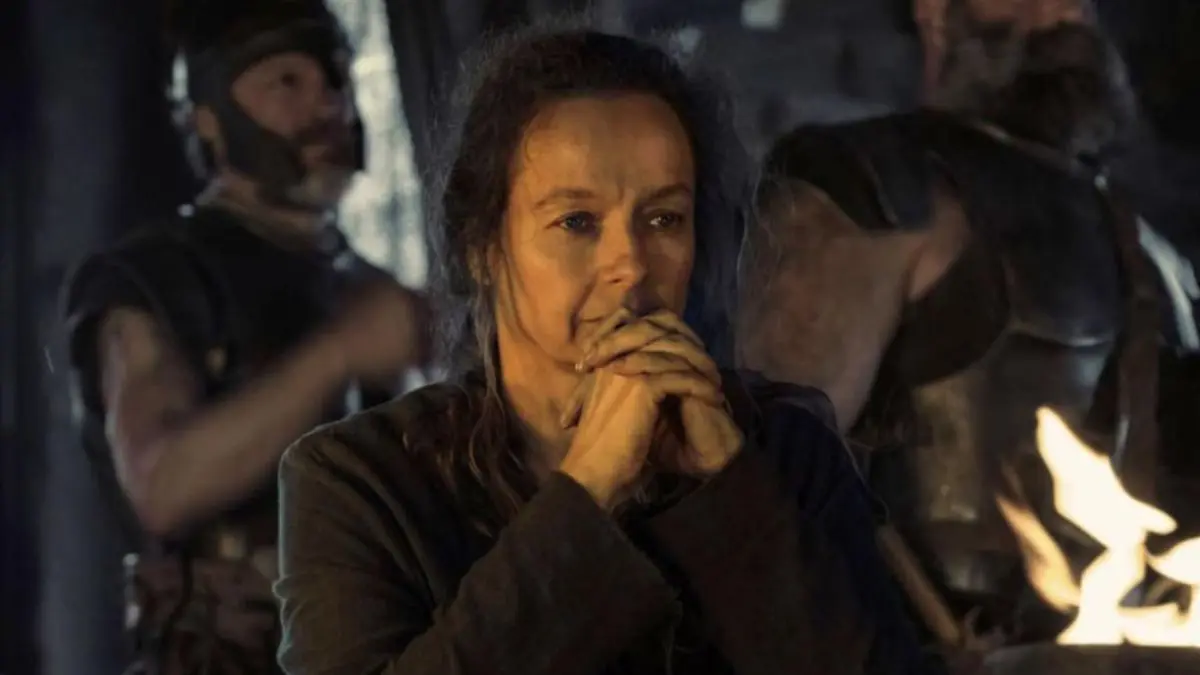
But with the 172-minute IMAX production now before the world, the post-screening trade talk and critical opinion have settled on a much more unorthodox focal point: Samantha Morton. In what is a staggering piece of cinema replete with 70mm grandeur and mythological beasts, it is her short, icy work as Circe on Aeaea that has become the film’s true emotional pivot.
Mythic Magic to Visceral Body Horror
One could expect a standard adaptation to treat Circe’s turning of Odysseus’s men into swine as some glossy bit of sorcery or whimsical fantasy. Nolan and cinematographer Hoyte van Hoytema have done the opposite, making it one of the most unsettlingly physical set pieces in his catalogue. There is no CGI hand-waving here; it is body horror in its purest form, an eerie study in flesh and degradation. Morton is at the centre of this tonal shift, lending Circe a menacing stillness where lesser hands might have gone for camp.
                     ┌─────────────────────────────┐
                     │   TRADITIONAL MITHO-EPICS   │
                     │ Magical, Glossy Sorcery     │
                     └──────────────┬──────────────┘
                                    │
                                    ▼
                     ┌─────────────────────────────┐
                     │   NOLAN'S REINTERPRETATION  │
                     │ Visceral, Organic Horror    │
                     └──────────────┬──────────────┘
                                    │
                                    ▼
                     ┌─────────────────────────────┐
                     │   MORTON'S PERFORMANCE      │
                     │ Restrained, Calculated Threat│
                     └─────────────────────────────┘
Reframing the Female Archetype
Nolan’s script has a way of discarding the usual clichés of the exotic seductress or the capricious witch standing in the way of a hero. Instead, we see a woman defined by power and self-preservation. Her magic is a kind of moral mirror, exposing the dehumanized, predatory nature that ten years of war in Troy has put into the minds of Odysseus’s crew. Morton handles this with remarkable restraint. She does not grandstand; her cruelty is not senseless but a calculated defence mechanism from someone who has made of her past vulnerability an absolute authority. It is a tragic, political reading of a character often misunderstood in classical literature.
Technical Craft
From a technical standpoint, the sequence is a triumph. Ludwig Göransson puts aside the orchestral flourishes for the Aeaea chapter in favour of a low-frequency drone and organic percussion that complements the horror. Nolan uses macro-lenses and extreme close-ups on the 70mm IMAX cameras to put the viewer in Morton’s face. He makes the case that an actor’s expression on an eight-story screen can be as imposing as any CGI army, even in an epic full of Mediterranean vistas.
“She brings such depth of thought to her role—there are simply no limitations in her performance. The film’s emotional core truly lived or died on whether Circe worked.”
— Christopher Nolan
Heath Ledger’s Shadow
The force of Morton’s performance was plain to see on set. Emma Thomas, the producer, said there was an outburst of spontaneous applause from the crew after one of Morton’s key monologues, something you do not often witness on a Nolan film. She put it down to a level of collective awe not seen since Heath Ledger was working his magic as the Joker on The Dark Knight. A fair comparison for the raw energy Morton mustered in her limited time.
Minimal Screen Time, Maximum Impact
| Analytical Dimension | Standard Epic Treatment | Nolan & Morton’s Execution |
|---|---|---|
| Character Function | Narrative obstacle / Seductress | Tragic, political, and physical force |
| Visual Approach | CGI-heavy metamorphosis | Organic, unsettling body horror |
| Performance Style | Broad, theatrical sorcery | Deeply internal, restrained intensity |
| Sonic Design | Grand fantasy orchestration | Visceral, low-frequency drone & silence |
In the end, The Odyssey is filled with Hollywood royalty and spectacle, yet Morton proves again what she has shown in everything from Sweet and Lowdown to The Walking Dead: that real narrative power is in the craft of the performer.
About the Author